




Canada is the only G7 country without a standalone strategy. Industry groups are urging action.
Industry groups want Canada to have a standalone national semiconductor strategy. A Liberal MP said this week that a national strategy is a “stand-out” priority. But Minister of Artificial Intelligence and Digital Innovation Evan Solomon says Canada will not pursue one.
In an interview at Chips North on Tuesday, Solomon told BetaKit that Canada already has a strategy around semiconductors, as a lot of the country’s compute programs will apply to semiconductor companies.
“Canada has incredible assets … but perhaps we haven’t spent time to define a clear path as to how we scale them.”
Jenna Sudds, Liberal MP
“Part of the AI strategy is to develop domestic capabilities, but we are not gonna have … a separate semiconductor national strategy, specifically on that,” Solomon said.
One of the upcoming AI strategy’s six pillars teased in the Spring Economic Update is titled “Building the Canadian Sovereign AI Foundation,” meant to support building the country’s sovereign compute infrastructure at scale.
This past December, industry groups warned that Canada is the only G7 country without a national semiconductor strategy; they argued that the gap could threaten Canada’s competitiveness, capacity to scale innovation, and ability to exercise technological sovereignty over the digital economy.
In her opening remarks at the semiconductor industry conference on Tuesday morning, Kanata MP Jenna Sudds also noted how Canada lags its G7 peers in this regard.
“Canada has incredible assets … but perhaps we haven’t spent time to define a clear path as to how we scale them,” Sudds said, adding that developing a national semiconductor strategy is a “stand-out” priority.
RELATED: Canada to create AI and Labour Advisory Council, Solomon says
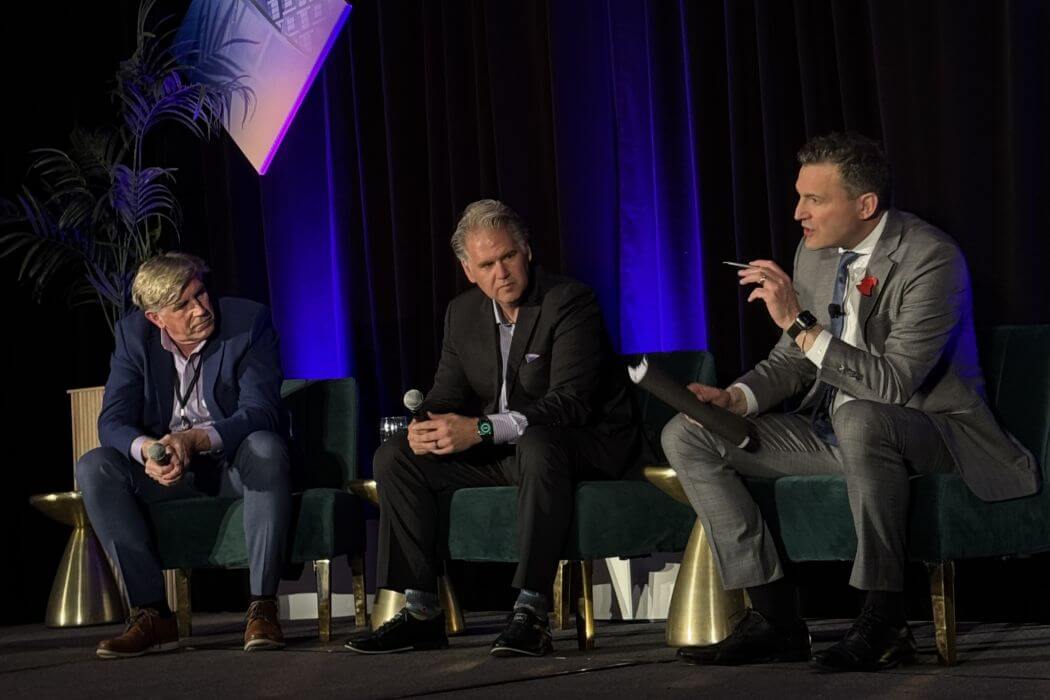
When asked on stage where semiconductors fit into the AI strategy, Solomon noted existing programs like the Sovereign AI Compute Strategy, the government’s $120 million contribution to the Fabrication of Integrated Components for the Internet’s Edge (FABrIC) challenge, and the spinout of the Canadian Photonics Fabrication Centre.
“Semiconductors are going to be an important part of the strategy, but the main thrust of the strategy is going to be building the major infrastructure pieces, making sure that we’ve got the talent, … and making sure that we’re building what we call pro-worker industrial AI,” Solomon said on stage.
Solomon also noted to BetaKit the $5-billion Strategic Response Fund (SRF). The fund launched in September 2025 as a successor to the Strategic Innovation Fund, with a focus on helping sectors impacted by tariffs. It provided $210 million to IBM and other semiconductor firms in Bromont, Que., in December to build out semiconductor manufacturing capabilities.
“We put a fair bit of money and a fair bit of strategy towards it already,” Solomon said.
Feature image courtesy Chips North.