




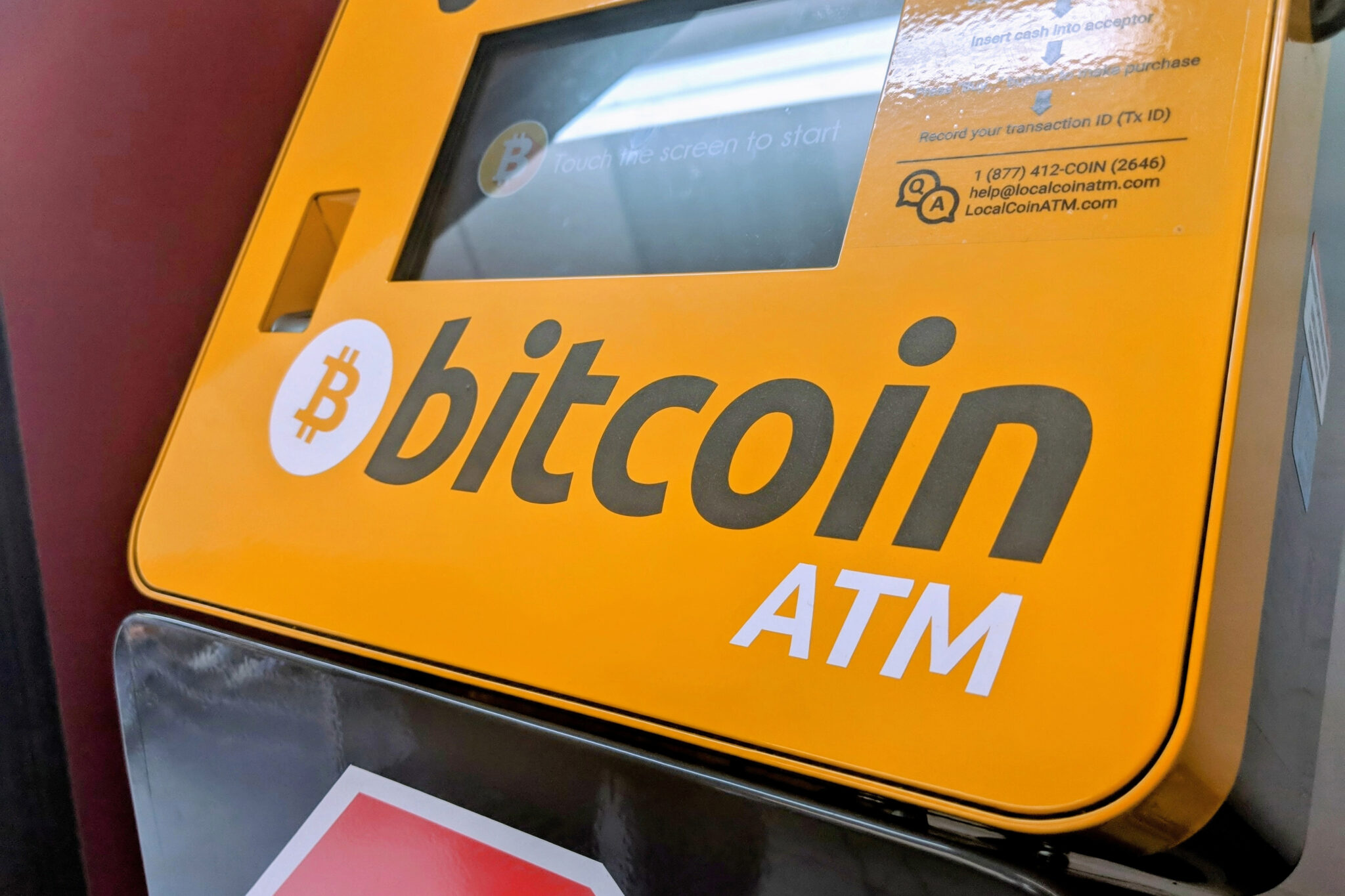
Nearly 4,000 cryptocurrency ATMs are located across Canada.
A proposal from the federal government to ban cryptocurrency ATMs is drawing backlash from Canada’s digital asset industry, with advocates and industry leaders calling for more consultation.
Buried in a section of Canada’s Spring Economic Update 2026 is a subsection outlining the establishment of a Financial Crimes Agency that would combat illicit financial activity like fraud and money laundering. A line item therein reads: “to protect Canadians by shutting down a primary method for scammers to defraud victims and for criminals to place their cash proceeds of crime, the Spring Economic Update 2026 proposes to ban crypto ATMS.”
“My encouragement to the government right now is could we please have a consultation?”
Koleya Karringten, Canadian Bitcoin Consortium
For those not involved in the digital asset space, crypto ATMs allow users to take fiat currency, like the Canadian dollar, and deposit it into an ATM to purchase digital cryptocurrencies like Bitcoin. Those funds are then deposited into the users digital wallet, or the wallet of whoever the deposit is being sent to.
The proposal, which as of press time is neither law nor has been introduced in any legislative body, frames crypto ATMs as primary points of contact in all manner of illicit transactions from petty fraud to sanctions evasion, money laundering, and even the financing of terror organizations.
Similar bans have been enacted south of the border, including in Indiana and Tennessee, with another in Minnesota working its way through the legislative system.
While the report’s proposal is incredibly sparse—it is limited to just a few sentences with little to clarify timelines, enforcement or the logistics of such a ban—it has nonetheless prompted a flurry of concern from cryptocurrency enthusiasts, advocates, and the industry itself.
Adam O’Brien is the founder and CEO of Bitcoin Well, an Edmonton-based Bitcoin company that was among the first in Canada to roll out physical crypto ATMs. Today, the company owns more than 150 of the nearly 4,000 crypto ATMs operating in Canada.
O’Brien said he feels the proposal is misguided and fails to meaningfully tackle financial fraud in Canada, and that by taking away the ability to purchase cryptocurrency directly and privately with cash—which a ban on physical ATMs would all but do—it infringes on the founding principles of financial freedom that underpin the wider crypto industry.
“I don’t think that anyone thinking about this for more than two seconds is under the impression that getting rid of Bitcoin ATMs stops fraud in Canada,” O’Brien said. “Can you show me the logic here of how we’re actually trying to prevent fraud and not just playing whack-a-mole?”
A Canadian Anti-Fraud Centre (CAFC) report outlined in CBC reporting from 2025 lists the amount Canadians lost via scams through crypto ATMs as being just over $14 million in 2024. In O’Brien’s view, that’s not insignificant, but represents a very small portion of a much larger financial crime ecosystem.
“I think there’s a lot more than $14 million in fraud going on in Canada,” he said. “What about gift cards? The romance scam? E-transfers obviously get absolutely dummied with fraud. We’re not going to ban e-transfers.”
Broadly, the Canadian Competition Bureau estimates that Canadians lost more than $700 million to all manner of financial fraud in 2025 alone.
O’Brien said he believes the industry is already working diligently to prevent fraud, outlining Bitcoin Well’s preventative efforts like employing unskippable fraud-prevention messaging at each of their kiosks, blacklisting crypto wallets associated with financial crime, and consulting with the Edmonton Police Service on cryptocurrency education for officers.
It’s that last point—education—that O’Brien feels would be a better remedy than a ban,
“The root fix is going to be education.”
A blind spot
Not everyone agrees with O’Brien. Ritesh Kotak, a Canadian cybersecurity and tech analyst, said he supports the proposal.
“This is not the only step that needs to be taken, but it’s definitely a step in the right direction,” Kotak said of a potential ban.
Kotak’s concern centres around the blind spots that crypto ATMs can create, particularly for those not familiar with digital assets. Kotak said in many cases, users only require a crypto wallet address or QR code in order to send funds and that funds can be transferred instantaneously across vast jurisdictions making it difficult for illicitly obtained cash to be recovered or traced.
Kotak also said that he feels there needs to be better “know-your-customer”—mandatory identification regulations in finance—compliance at crypto ATMs.
Related: AI strategy pillars, new SMB procurement program revealed in Canada’s Spring Economic Update
While Kotak acknowledges that fraudsters will likely find other methods, he said any way of making it more difficult for financial criminals is a benefit.
“One of the things we’ve learned is that when you cut off one way that scammers are able to defraud people, they’ll find another to pivot to. But the whole idea is cutting it off and making it that much more difficult,” he said.
BetaKit reached out to the RCMP, Department of Finance, and Canada’s national financial intelligence unit, FINTRAC, to ask about the prevalence of fraud and other illicit activity at crypto ATMS, but none of the above agencies responded to our request by press time.
Lack of consultation
Others in the crypto industry, like the Canadian Bitcoin Consortium, a Calgary-based advocacy and industry group, are expressing frustration over what they feel is a lack of consultation from the government.
Koleya Karringten, the executive director of the consortium, said she’s not been aware of any communication from the government asking the industry to improve its compliance with KYC and anti-money-laundering (AML) regulations, which are designed to prevent financial crimes.
“There was no prior communication to ask for them to enhance KYC and AML. There was no communication about asking about best practices. It was basically just ‘well, this is what we think is happening,’” she said.
Karringten said there were other steps that could be taken before going all the way to the nuclear option of outlawing the kiosks, including changing policies that currently allow cash transactions under $1,000 to be anonymous.
“A really simple policy shift is … to just take that amount of $1,000 down to $0,” she said. “It would force every bitcoin ATM operator to enhance and enforce 100 percent KYC and do enhanced reporting to FINTRAC on suspicious transactions.”
Far from having an issue with further anti-fraud protections, what Karringten really wants is a seat at the table for leaders in Canada’s crypto industry.
“My encouragement to the government right now is, could we please have a consultation? Could we please have some discussions? Can we bring FINTRAC and Finance Canada to the table with Bitcoin ATM operators?” she said.
BetaKit’s Prairies reporting is funded in part by YEGAF, a not-for-profit dedicated to amplifying business stories in Alberta.
Feature image by Sarah Rieger.