




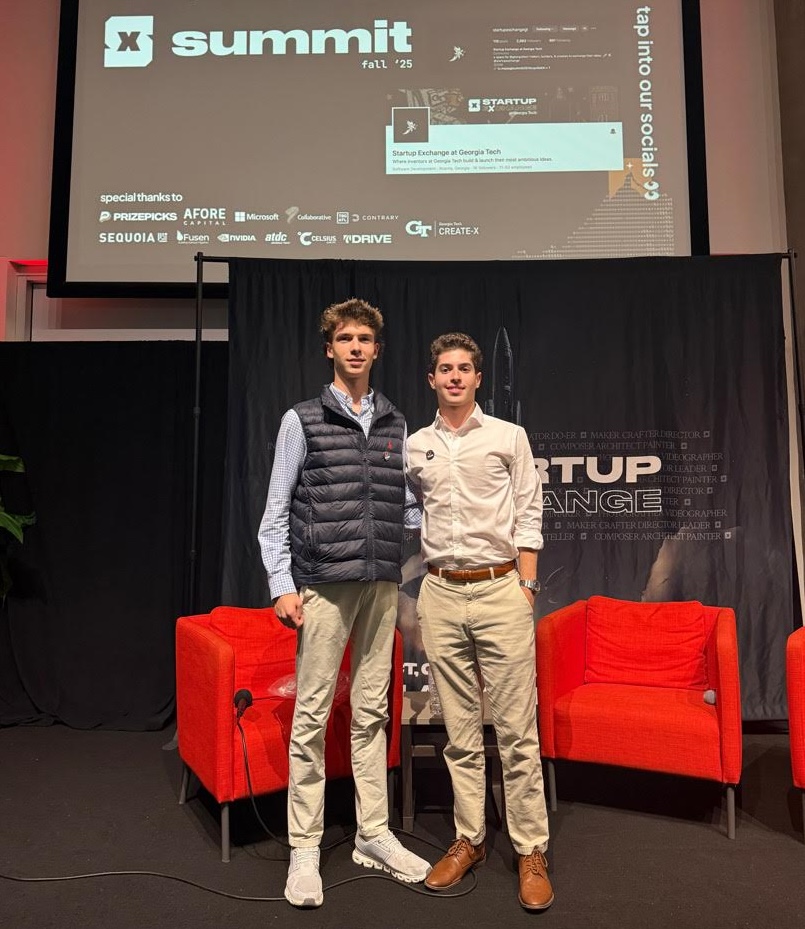
Ari Milrud says he has been working on creative business ideas since he was seven years old. But he said he really caught the entrepreneurial bug as a high school student, when he began wholesaling properties.
While working with distressed homeowners and investors, he told Hypepotamus that he “I had to learn everything on my own, watching videos and talking to agents.”
“I even deepened my voice to be taken seriously on the phone. It was a big learning curve as there’s a lot of formal lingo in the industry,” he added.
While building up his burgeoning real estate career, he saw a tech opportunity.
Now as a senior at Riverwood International Charter School in Sandy Springs, Georgia, Milrud is co-founder of Hive, a platform connecting house flippers with top contractors.
Entrepreneurial Learnings For Real Estate Tech
Milrud started building Hive after working on his first house flipping project.
“I found the deal and walked it with different contractors. This was my first time actually speaking with contractors and learning the process that comes after acquisition. It was here that I realized a huge problem: flippers and contractors rarely speak the same language, both figuratively and literally,” he told Hypepotamus. “There is a huge transparency and trust issue. Contractors know exactly how much construction knowledge you have within the first 2 minutes of talking to you. This leads flippers, especially new ones, to often get taken advantage of in an extremely relationship-based industry. I couldn’t find a tool out there built for investors to solve this, so I decided to make one.”
Hive’s platform charges house flippers 3.5% of accepted jobs up front and charges contractor $100 a month for unlimited bids. But in its early stages, every user’s first job is free, Milrud added.
“To take 3.5% of each job, we allow flippers to post jobs and start receiving bids, but we make the bids anonymous. And to do this, we’ve been working on a really good rating system where you can see the contractors’ in-depth ratings with different criteria and weights, creating an overall score,” he added.
In its early days, the Hive team is reaching out to local Metro Atlanta-based contractors.
“For Fix-and-Flippers, we’ll be using the rolodexes of lenders in the Atlanta area, asking them to post their next project on Hive, as it costs nothing. After maximizing growth this way, we’ll move on to different forms of marketing through social media,” said Milrud. “Within the first year of launch, we also want to create subcontracting solutions within Hive, to allow contractors to hire all their subs with us as well.”
Building For Competition
Milrud said he needed to bring on a technical co-founder. He found that person in a fellow Metro Atlanta high school student, Louis Singer, from Mount Vernon High School in Sandy Springs.
But to scale, the Hive team turned to Georgia Tech.
He learned about the Genesis Program through Startup Exchange at Georgia Tech, which describes itself as open to “all builders.”

“I saw it was open to any Georgia Tech student. I decided to just give it a shot, and apply, as I didn’t see any requirement for a student ID or student email. To our surprise, we got accepted. We didn’t know if it was only for Georgia Tech students, but at the first meeting, everyone there was a student, so we told people we were freshmen and we had to learn the dorm names for when they asked, in case the program was student-only,” he told Hypepotamus.
For five weeks, the Hive team joined weekly meetings and ultimately participated in the Startup Exchange Fall Summit and Demo Day.
“I think demoing to a lot of people really helped us understand what we’re building even more, due to the number of times we explained the startup and the range of questions we received. After voting from the attendees and the judges, we ended up winning 2nd place (out of 140 teams), receiving guaranteed Fellowship interviews, and $25,000 in developer credits,” he said.
Building Hive For The Future
So what’s on the horizon for Milrud and the Hive team?
After graduating from high school in May, Milrud will be working on Hive while starting his college career.
“As much as I’d like to get into VC one day, which has always been a goal of mine, I definitely do love steering the ship, creating things that solve problems. This journey has been one of the most fulfilling things I’ve ever done, and I can definitely see myself building Hive as far as I can for a long time,” he added.