




His fix to this digital decay problem? Stacklist, an Atlanta-based startup that lets individuals and businesses organize everything they want to share (resources, recommendations, playlists, local knowledge, portfolios) into curated collections other people can browse, follow, and reuse.
Building With Stacklist
In our AI-centric world, Hudson told Hypepotamus that the traditional website no longer helps people actually find and share information. Business owners either build a website themselves on Wix or Squarespace, or pay a design shop several thousand dollars for what Hudson calls an “expensive, static brochure” that decays quickly. From there, the only way to stay visible is to constantly create blog posts, Instagram Reels, and TikToks that all have short shelf lives but add hours of work to a team’s plate.
At its core, Stacklist is a platform for curation, helping users assemble collections. The differentiator, according to Hudson, is how the platform is built for machine readers, not just human ones. Stacklist has built its own protocol that labels content for AI crawlers. Hudson said the network gets crawled by AI and SEO agents more than 2 million times a month. That AI-first architecture is the product’s central bet. As more discovery shifts from search engines and social feeds to AI assistants like ChatGPT and Perplexity, content that’s structured for machine indexing will outcompete a static homepage or Instagram grid.
A Business Case To Build Stacks
One use case of Stacklist comes from real estate, an industry Hudson describes as facing a uniquely hard online visibility problem. Most people buy and sell properly on very rare occasions, leaving agents a narrow window to be remembered or discovered online.
Stacklist makes it possible for agents to take the local knowledge they already had and consolidate it into a single, shareable page instead of scattering it across texts and email threads. A real estate agent might put together a list of their favorite weekend excursions from a city, or a company might put out a curated list of recommendations. Those get turned into cards, stacks, and hubs that can be easily shared with respective clients and local families. Hudson said some real estate agents have seen their curated content surface directly in LLM responses to prospective buyers searching for local recommendations, which is a visibility play a traditional agent website wouldn’t generate.
Hudson draws a distinction between Stacklist and single-purpose tools like Linktree for link-sharing, Beli for restaurant recommendations, or Google Maps for travel suggestions. Stacklist’s aims to be a single hub for the kind of niche, personal curation that might currently live across websites, apps, LinkedIn profiles, and Instagram bios.
Meet The Team
But it is not just businesses that can benefit from Slacklists. Anyone who is constantly sending links back and forth could use the platform. Hudson traces the idea back to a trip to Venice in 2014, early in a relationship with his now wife. The couple attended an intimate theatrical performance. Back in the states, friends asked him to send details so they could go too, and he couldn’t reconstruct where he’d booked it or how to describe it. Because the reality was that his trip details were bookmarked across places like Google Maps, Instagram, TripAdvisor, and his email inbox.
“[These platforms] all say you can save stuff , but what you’re doing is you’re just making a web of wish lists that don’t connect,” he added. That gap in how links are saved and shared became what he calls the first building block for Stacklist.
Today, Hudson’s personal Stacklist tracks book, movie and restaurant recommendations.
Before founding Stacklist, Hudson built his career in the agency world at firms including Ascendis, Work & Co, Sprinklr and Fjord.
Stacklist was bootstrapped for its first year, and is now backed by Hawaii-based Blue Startups and Kentucky-based Connetic Ventures, per Crunchbase.
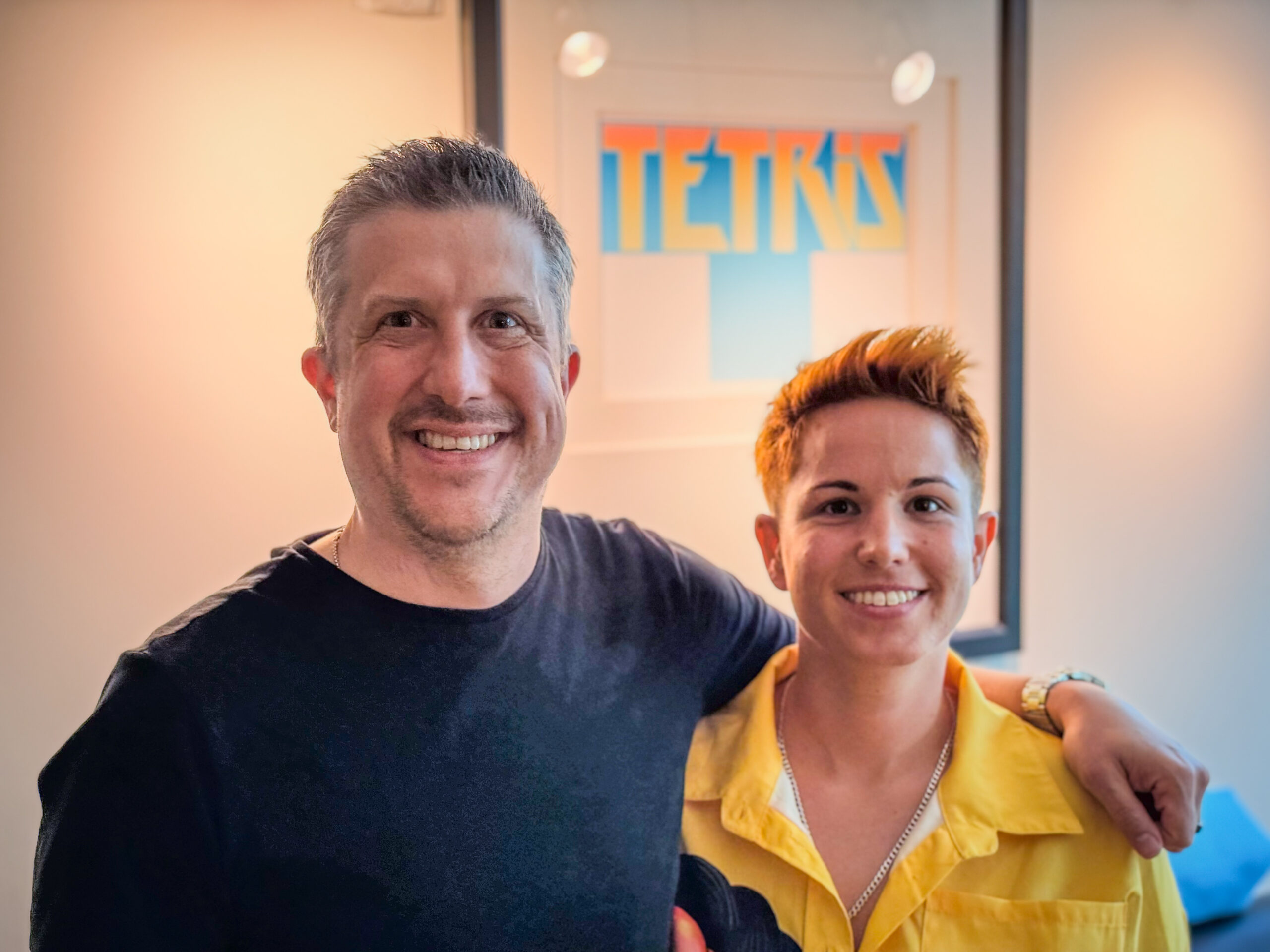
He co-founded the company with Martina Zrnec (also seen in featured photo), who also serves as Stacklist’s CTO. Zrnec joined quickly after the company was founded in 2024 and has overseen the product, engineering and AI strategy since.
Want To See Stacklist In Action?
After seeing Stacklist in action, Hypepotamus saw a unique case study for online publications. So, Hypepotamus is also creating its own Stacklist based on this article as well as a full hub around our content across the Southeast’s tech ecosystem. Check it out and share around!