




Want more tech stories in your inbox? Sign up for our newsletter to get the latest news from across the Southeast. Subscribe here.
But inside The Weather Company’s headquarters in Brookhaven, Georgia, the conversation around Winter Storm Fern started long before it hit office chatter. Meteorologists and technologists have been tracking its path, while the company’s newsroom has been preparing content designed to help the public better understand what upcoming weather patterns mean. In fact, that editorial team churns out up to 50 pieces of content a day, across platforms and formats. Right now, that content is helping people track the storm and better prepare based on their location.
The Weather Company’s branding and logo has long been tied into Atlanta’s business and media landscape, with its roots dating back to 1980 (the same year CNN also launched in the city).
But you might not realize that, at its core, it is one of the legacy tech and data businesses in Atlanta.
“Ultimately we are ‘OG’ AI. We are original algorithmic capability at scale,” says CEO Rohit Agarwal, who joined in late 2024.
For decades, the company built its reputation on accuracy. Now it’s making the case that its data and AI capabilities can usher in more personalized products that gives context to upcoming forecasts. And in a world where climate volatility is rising, that shift could change how consumers and businesses make better decisions…from commuting and travel to major life events.
A Personalized Next Chapter
Today, The Weather Company’s most popular consumer product is its flagship app. But one of its largest growth engines has been the enterprise side of its business.
Now, that enterprise expertise is shaping what weather-related experiences we will have on the app and website.
Agarwal says 2026 will bring meaningful changes around how the business is organized and what it delivers. Traditional weather apps deliver one set of information out to their entire audience. But that misses how differently people experience the same forecast. The wind predictions for one day means something different to a runner than it does to a pilot, a golfer, or an event planner. The Weather Company’s bet is that the next generation of forecasting will be less about general predictions and more about tailored guidance and “specialized forecasts,” Agarwal added.
That personalization capabilities was largely built out on the B2B (business-to-business) side of The Weather Company. Aviation, defense, agriculture, and media customers use The Weather Company’s data to plan operations, reduce risk, and respond faster to weather-related changes. Looking forward, Agarwal says there will be more “cross functional” work between the B2B and B2C side of the company. That means that the same intelligence used to anticipate weather changes for pilots, for example, could be packaged for everyday travelers who want more data around what their day in the sky might look like.
“We’re the best in class at knowing what weather is going to disrupt travel,” Agarwal told Hypepotamus. “We’re the leading provider of turbulence information and data. Why don’t we inform consumers?”
In other words, there is an opportunity for weather data to become a decision layer, not just a displayed radar map presented on a phone screen.
That strategy is already showing up in The Weather Company’s product direction. The company is currently beta testing a next-gen radar and an AI-Powered Weather Assistant™ app for professional-grade storm tracking that will be launching to the public soon.
Atlanta’s strategic advantage
We first profiled Agarwal at the end of 2024, just as he was taking over the CEO position after years as Chief Product Officer at HSBC, CNN, and SoundCloud. He is leading the company through a new era. The Weather Company was acquired by Francisco Partners in 2024, after having been part of IBM since 2016.
Over the years the company has expanded its footprint in Atlanta and across the globe, with offices currently in Massachusetts, the United Kingdom, and Japan. But even as the company grows, Atlanta remains central to its identity.
“Atlanta is a hub of innovation around meaningful industry,” Agarwal said, adding that the region’s universities and talent pipeline also has also been key to keeping the company headquartered in town.
And with Atlanta watching the same storm system this week, The Weather Company’s next chapter feels especially fitting. It’s an Atlanta legacy brand evolving in real time, with the forecast still at the center of the story.
Office Weather Talk? Here’s What to Actually Watch For
If you find yourself asking coworkers “Do you think it’ll really hit?” or “What time is it supposed to start?” you’re likely not alone this week.
But do you know what you should be looking for in a forecast?
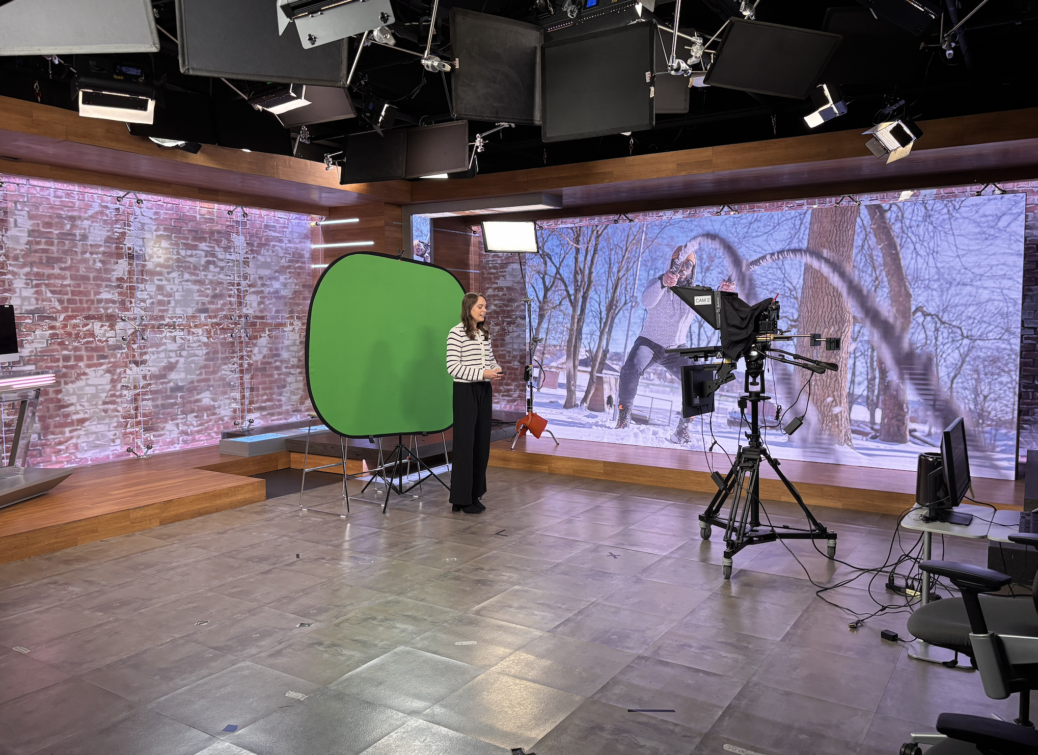
Caitlin Kaiser (in featured photo), a digital meteorologist at The Weather Channel app and weather.com (part of The Weather Company), says the biggest misconceptions come from treating the forecast like a fixed answer.
“Your forecast is always changing and evolving,” Kaiser says. That’s why she recommends checking back often, especially during major events like winter storms or hurricanes, because more meteorological factors come into focus as the timeline gets closer.
Another key tip: confidence matters just as much as the prediction. Kaiser says meteorologists feel more comfortable when weather models align and show a clear path. When models disagree, it doesn’t mean the forecast is “wrong,” It just means there’s more uncertainty in the system.
“The level of comfort in making a forecast depends entirely on the scenario,” she explains.
For people making decisions a few days out, Kaiser points to probabilistic forecasts as one of the most useful tools. Instead of presenting one single forecast, probabilistic forecasting shows a range of outcomes and the likelihood of each, helping people and businesses plan around what’s possible, not just what’s predicted.