




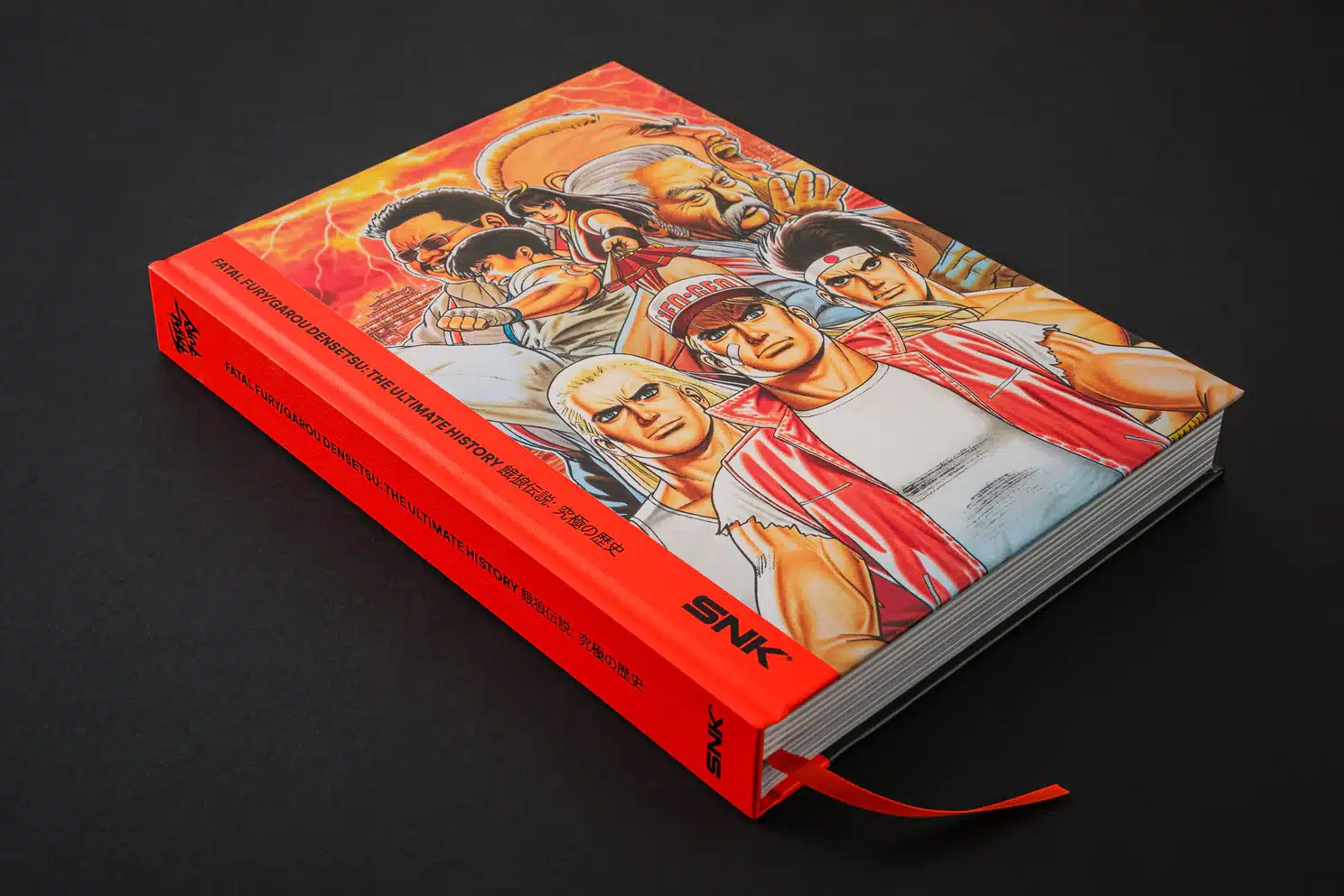
There is a moment, before you even open a Bitmap Books release, when you start to realise the book is only part of the actual product.
- Born from nostalgia
- The sound of 900 boxes being taped up
- Every book is different
- Bitmap Books will never use generative AI
- More modern machines are getting old now
The box lands with more care than most expensive electronics. The cardboard has been thought about. The artwork on the outside has been thought about. The corners have been thought about. Inside, the book is wrapped, protected, sealed, and presented in a way that makes the whole thing feel less like something arriving in the mail and more like a ceremony. This is not an Amazon driver flinging a hardback into a loose cardboard sleeve and waiting for the delivery dude to wang it over your fence into your inflatable hot tub.
Bitmap Books understands something the games industry often forgets: memory has a texture to it. It has a weight and a smell. It has paper stock, print quality, screenshots bigger than the screens you used to play on (I’m looking at your Game Boy), and the odd irrational reluctance to crack the shrink wrap open, because doing so feels like damaging the artefact. Would Indy have torn the paper off the Grail?
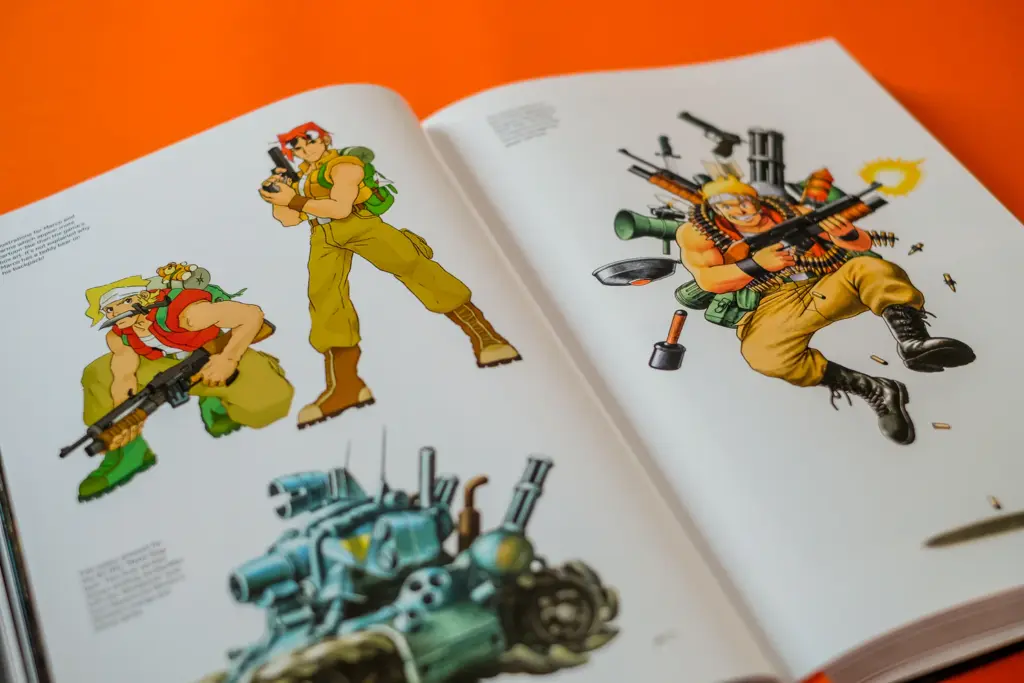
That is where I was when my copy of Fatal Fury/Garou Densetsu: The Ultimate History arrived in the mail. I knew I needed to open it. I also knew a small, stupid part of my brain wanted to preserve it untouched forever, like some ancient Neo Geo relic that had arrived from 1993 via a better timeline. I tore the shrink wrap off, and I am still regretting it.
Born from nostalgia
The Escapist spoke to Sam Dyer, the founder of Bitmap Books, about how a side project born from graphic design, nostalgia, and the Commodore 64 became one of the most respected publishers in gaming culture. What started as a man playing around in InDesign in the evenings has become a publishing house with a roadmap stretching years ahead, major licensed projects with companies like SNK, and a collector audience that treats each new release as a major calendar event.
The more Dyer explains it, the clearer it becomes that Bitmap’s success is not just about retro gaming. It is about care. You know, that thing we seem to have lost during the course of this century, as the corporations continue to do, er corporate
“I always do consider myself a graphic designer,” Dyer tells The Escapist. “I went to Somerset College of Arts and Technology in the late ’90s, studied graphic design, then moved to London and worked for some branding agencies up there.”
He later moved to Bath around 2006, started a family, and continued working as a graphic designer for a local agency. But like a lot of creative people who end up doing corporate client work, he began to feel the edges closing in.
“I’d started getting a bit frustrated, as we all do, with a corporate job,” he says. “Some of the clients were a little corporate, and it just wasn’t really scratching that itch creatively.”
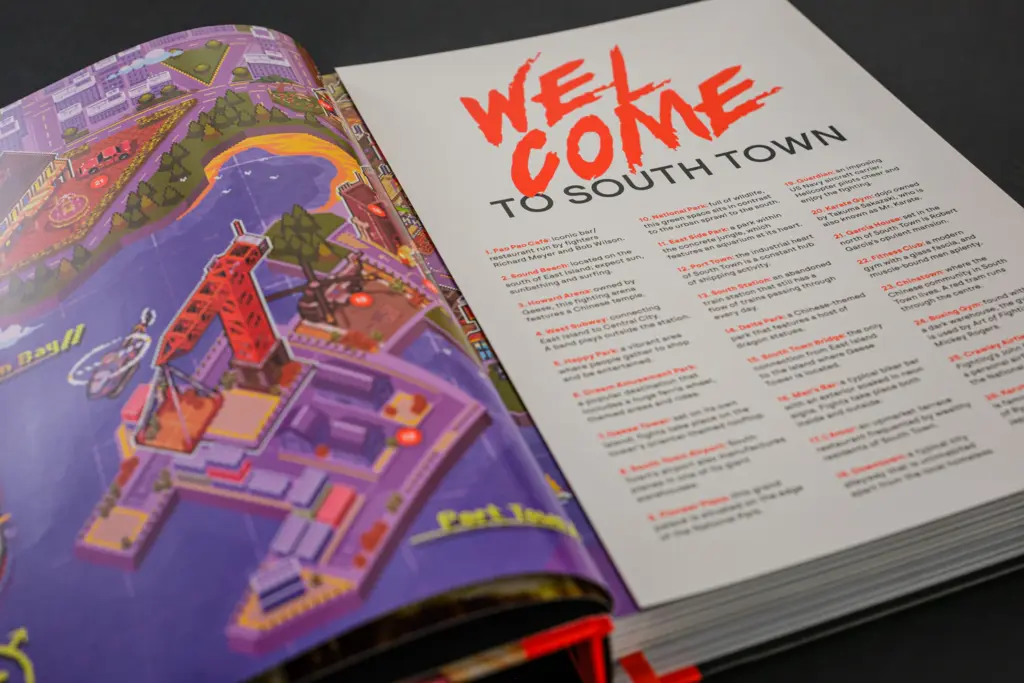
At around the same time, Dyer found himself drifting back into retro gaming. The timing will be familiar to plenty of readers of a certain age. Children arrive, life gets serious, and somewhere in the chaos, your brain starts poking around in the dust of the past. Suddenly, you are looking at old computers on eBay at midnight (spoiler: I just bought an Acorn Electron last night) and convincing yourself it is not a problem because, technically, you could be doing something worse. With a hammer.
“Around that time, I’d started getting back into gaming, particularly retro gaming,” he says. “A lot of people do when kids come along. You start looking back at childhood and all that sort of stuff.”
Dyer saw that somebody else had produced a games book, and the penny dropped. He had the design background. He had the love of games since he was a kid. The Commodore 64 had been his first computer. Why not try something?
“I thought, ‘Wow, I could use my graphic design skill and maybe do my own book,’” he says. “I didn’t realise there was an audience for this stuff. I just started playing around in InDesign, really. The Commodore 64 was my first computer, so that was a really good place to start. There didn’t seem to be anything around, so I just started having fun in the evenings and weekends.”
There was no five-year plan. No deck or growth strategy. There was certainly no retro publishing empire mapped out on a whiteboard in the kitchen.
“There was no plan to create a publishing house,” Dyer says. “It was me having a bit of a laugh, really, having a bit of fun playing the games and taking screenshots.”
Then he began sharing spreads online. The retro community responded instantaneously.
“People were like, ‘Wow, when’s it out? When’s it out?’” he says. “Obviously, it encouraged me.”
That encouragement led him to Kickstarter in 2014, when the platform still felt like a genuine way for niche creative ideas to find an audience, rather than somewhere large companies could pretend to be plucky little start-ups and get people pre-purchasing products that were already coming out.
“Kickstarter was massive back in 2014,” Dyer says. “It was obviously quite new in the UK. Without Kickstarter, I wouldn’t have been able to do it. It was a fantastic way of gauging interest.”
The sound of 900 boxes being taped up
The first book attracted around 900 backers. That was a wonderful start, but also a logistical nightmare if you aren’t prepared for that.
“I think we had about 900 backers on the book, which was a fantastic start and obviously quite overwhelming because it all just sort of happened,” Dyer says. “I was working a full-time job. The printing side of things and the design were fine. It was really the shipping and the packing.”
That part he did himself.
“I packed all the books myself, which my wife was not very happy about,” he laughs. “We had a toddler at the time, and my poor wife every night had the sound of tape being wrapped around boxes. I packed up all these 900 books and got them sent out. Then I said to myself that if I do another book, we will find someone else to do this stuff, because I just can’t do it myself.”
It is a funny image: the future of premium gaming book publishing being born in a house full of cardboard, parcel tape, and domestic tension. But it also explains a lot about Bitmap Books. The first book taught Dyer that a product does not end at the page, a mantra very close to my own heart. It includes everything around it. The order. The wait. The box. The unboxing. The first impression before the first page. This is how gaming media used to be – the thrill of going to the newsagent when you knew the new edition of your favourite magazine (you know it was Amiga Action – it better had have been!) came out.
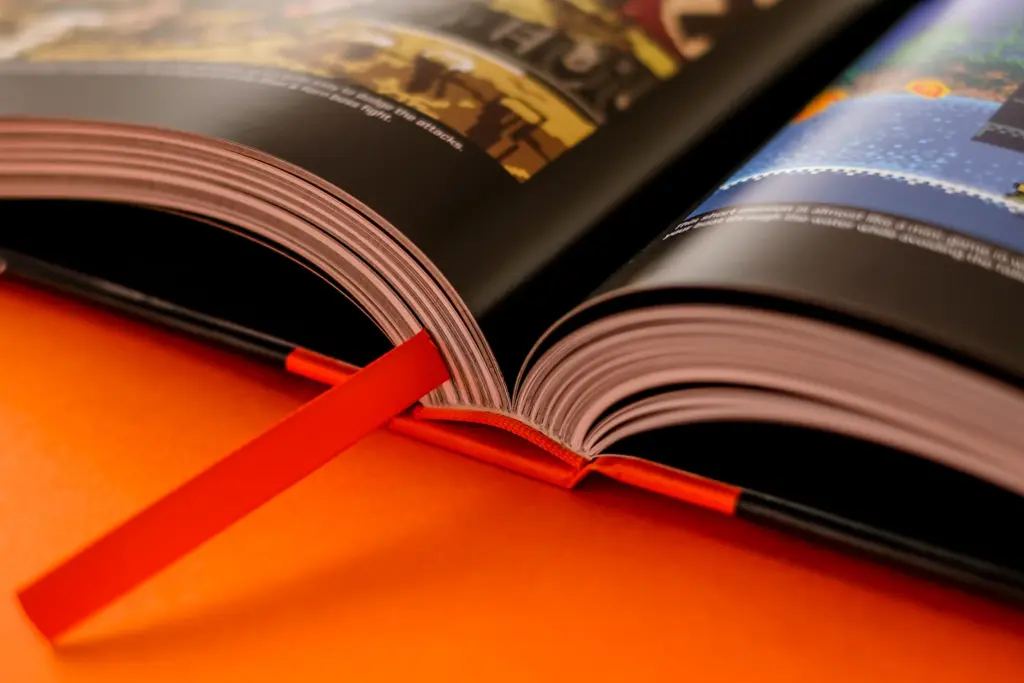
For Dyer, that instinct comes directly from design. Bitmap’s books are not cheap throwaways, and nor are they meant to be. They are premium objects in an industry where so much of gaming’s past is now trapped in ROM folders on failing hard disks, YouTube footage, old forum posts, dead websites, and ageing memories. From the start, Dyer understood that the book had to look special before anybody would believe it was special.
“My training and my understanding is that if you are pitching something like a Kickstarter, you’ve got one chance,” he says. “People look at that page and they’re either going to think, ‘It’s shit, not interested,’ or what you want them to do is think, ‘That looks amazing. I’m going to back it now.’”
That has become the Bitmap identity. The book has to sell itself, but not in the grubby sense. It has to justify its own existence. It has to feel like something made by people who give a toss. remeber when that was common?
Packaging is a huge part of that. When Fatal Fury/Garou Densetsu arrived, the experience began with the box itself. It had pixel artwork on the outside. It felt like a parcel designed by people who knew the person receiving it would care. That is not accidental. I do care.
“For me, that’s such a big part of it,” Dyer says. “We all know what it’s like when you receive something in the post. If it’s battered and the company hasn’t cared about how it’s packed, that first impression taints the thing, doesn’t it?”
His inspiration was not another book publisher. It was Apple. That most corporate of corporates.
“It was like when you get an iPhone,” he says. “That was kind of my inspiration for the packaging. When the lid slides off, it all just feels like it all works and everything has been considered. That’s kind of where I was trying to go with it. Obviously I’m not saying I’m Apple, but that aspiration to make every single aspect, from ordering to receiving the book and then the actual book, feel like an experience.”
That word comes up a lot: experience. It sounds like marketing guff when most companies use it, but with Bitmap it is literal. These books often cost £30, £40, or more. Some hit the point where you need to explain to another adult in your house why another enormous slab of arcade history has appeared on the doorstep. Dyer knows that, although he’s not the one trying to explain it to my wife, although he probably would if I asked him to.
“They aren’t cheap books,” he says. “If you’re asking someone to spend £30 or $50 or whatever, then it needs to be good value for money.”
The company now works with a specialist fulfilment house, using different sizes of corner protection and book wraps to fit its releases. It is the kind of detail many companies would ignore, because it is boring, expensive, and largely invisible when everything goes right. But invisible work is still work.
“There are other publishers out there that don’t go to this level,” Dyer says. “Maybe because it’s too much hard work, or maybe they’re not that bothered about the books surviving as much as I am. But if I’m designing a book for a year, the last thing you want is it to arrive with a dent in it. It’s the most disheartening thing in the world.”
That attitude has helped Bitmap build an audience that behaves less like a normal book-buying audience and more like its own collector community. Dyer is careful not to assume everybody buys everything. These are expensive books, and not everyone has bottomless shelf space or bottomless money. But he knows there is now a ritual around each release.
“We’re very lucky to have a really big audience of very passionate collectors,” he says. “I wouldn’t say they buy every book we release, because obviously some people haven’t got the money for that. But people really look forward to our books coming out. They’re like an event. Receiving it and the packaging is all part of it.”
That event has become the outward-facing part of Bitmap, but behind it is a production pipeline that sounds more like magazine publishing than a leisurely nostalgia business. Multiple books are being worked on at once. Some are almost finished. Some are being written. Some are still screenshots, research folders, rights discussions, or ideas waiting for the right moment.
“We’ve pretty much got everything planned until the end of 2028 at the moment,” Dyer says. “That’s like four books a year agreed until the end of 2028. Obviously the ones in 2028, I haven’t necessarily started yet, but I might be writing it, or I might be gathering some screenshots. It’s just a case of moving through them one by one.”
Every book is different
The process is now more structured, but the difficulty varies wildly depending on the subject. Fatal Fury/Garou Densetsu: The Ultimate History took around two years from signing the contract to finished books, largely because working with SNK involved translation, approvals, changes, and legal checks.
“The Fatal Fury book took probably two years from initially signing the contract to getting the books,” Dyer says. “Working with a Japanese company like SNK does slow things down. My contacts at SNK all speak English, which is great, but they need to translate Japanese. Then there are so many changes required and little legal things that slow down the process.”
Trigger Happy, Bitmap’s photographic book about joysticks, control pads, and odd peripherals, was completely different.
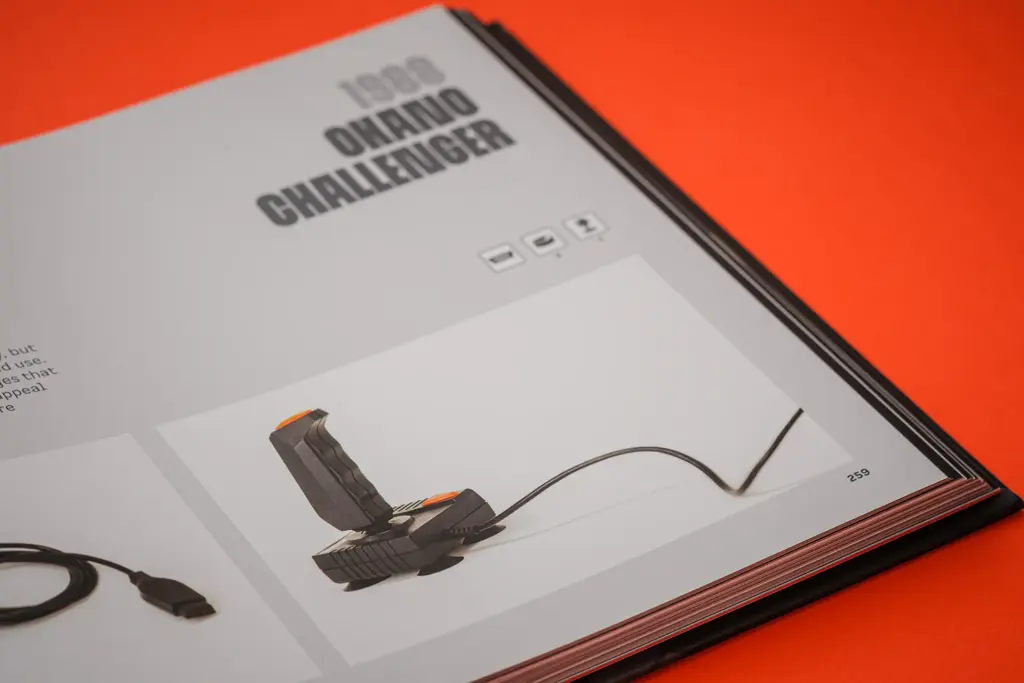
“That was working with a collector in Germany who had this amazing collection of joysticks, control pads, and other weird and wonderful peripherals,” Dyer says. “He’d already had the photos and a lot of the writing done, and he approached us. So that project was quite straightforward. That was about 10 months from start to finish.”
Some books, though, become little monsters.
Dyer names the PC Engine Box Art Collection as one of the most stressful projects Bitmap has produced. The idea sounds simple enough: photograph a huge collection of PC Engine games and present the box art beautifully. The reality was hundreds of CD cases in different conditions, many scratched, cloudy, or otherwise unsuitable for a clean photographic book.
“That was a massive undertaking,” he says. “I underestimated photographing all of the game cases. My photographer was in this collector’s house, and they were all in CD cases. The cases were in various conditions. Some had gone milky, some were scratched. What my photographer had to do was photograph good cases, then photograph the inserts, and then it was a massive Photoshop job to get it all sorted.”
It took longer than expected. It went over budget. It became, in Dyer’s words, “hard work.”
The SNK books brought a different challenge. There is a romantic idea that once a big company agrees to a project, it simply opens its archive and lets the publisher rummage around. That is not how it works.
“With The King of Fighters, it’s not like we were just given access to everything SNK had and selected it,” Dyer says. “We almost have to tell SNK what we want.”
That meant Dyer had to become part designer, part researcher, part detective.
“I had to buy loads of guidebooks and mooks and all these different books off eBay, scan the images that I wanted in low-res, put them in the book, and then they would send me the high-res version,” he says. “That was a big challenge. Really enjoyable, but quite a big undertaking.”
This is where Bitmap starts to become something more interesting than a premium nostalgia publisher. Its books are not just beautiful ways to revisit old games. They are acts of curation, preservation, and historical recovery. Some of the people interviewed in its books have not spoken publicly before. Some of the art would otherwise sit unseen in company archives. Some of the stories, if not captured now, may simply disappear.
Bitmap Books will never use generative AI
That preservation angle becomes especially clear when Dyer talks about AI.
“I would never use AI in any of our books for writing or for imagery,” he says. “It goes against everything. That is not a premium way to behave.”
His concern is partly ethical, particularly around image generation and artists’ work being used to train models without credit or compensation. But it is also practical. Bitmap’s value lies in original work, original access, and original context.
“With our books, we also try to talk about things that aren’t online,” he says. “In the Fatal Fury book, the people we’ve interviewed have never spoken before in that way, or even been interviewed, some of them. AI would never be able to do that anyway. Where is it going to crib it from?”
That feels like the key distinction in these controversial times. AI can scrape the surface of gaming history. It can summarise what already exists. It can imitate the language of nostalgia. It cannot sit with a developer who has never told their story. It will never know why a certain screenshot matters to someone who saw it in a magazine in 1994. It cannot understand the emotional violence of opening a mint-condition book and deciding whether to remove the shrink wrap.
For Bitmap, human labour is not an inefficiency as it is seen many companies today. It is the actual core of the product.
The business, however, still has to function as a business. Bitmap grew out of Kickstarter, but Dyer moved away from the platform once the company could self-fund. He felt uneasy continuing to use it after Bitmap had established itself.
“Kickstarter was really integral because it enabled us to build that foundation of people interested in the books,” he says. “I moved away from Kickstarter, because I could self-fund the books, I always felt uneasy using Kickstarter too much. It’s meant for people at the start of the process.”
Since then, the company has relied on its email database, word of mouth, and social media. Delegating the latter was a relief.
“We have someone, Greg, who does our social media,” Dyer says. “I used to do it myself, but I really struggled to keep on top of it. Greg’s amazing. He’ll do consistent posts every day, and having that consistency has been really great.”
Before that, Dyer says, social media became just one more late-night chore that needed doing.
“I’d be there at five to 11 every night thinking, ‘Shit, I haven’t done Twitter today,’” he says. “You’d end up doing a hastily cobbled together post at 11 o’clock when people were in bed. Delegating that side of things to Greg has been one of the best decisions.”
Bitmap became Dyer’s full-time focus almost by accident. Before COVID, he was splitting his time between freelance graphic design and Bitmap Books. Then lockdown hit, marketing budgets collapsed, and the freelance work disappeared.
“My freelance work dropped off a cliff, as it did for a lot of people,” he says. “Marketing budgets were slashed when we went into lockdown, and I was just left at home with Bitmap. I was really, really worried because nobody knew what was going to happen. Were people still going to want to buy stuff in lockdown?”
As it turned out, yes. They very much were.
“It actually turned out great in lockdown because people were at home and people spent money on stuff,” Dyer says. “We had one of our best years of sales ever in that period.” COVID gave him the shove he probably needed.
“I knew deep down that if I was going to make a go of Bitmap Books, I needed to take more time and take it more seriously,” he says. “It kind of forced me into that.”
Still, he does not present himself as a natural businessman. That is part of what makes Bitmap interesting. Dyer is not some LinkedIn hustle monster who reverse-engineered a passion business from a spreadsheet. He is a designer who had to learn how to run a company because the work became too real to remain a side project. You won’t find Sam Dyer posting cheesy pics of himself holding a book with the caption “It’s Fri-Yay!”
“I don’t enjoy some aspects of running a business,” he says. “One of my problems is that I tend to default to my happy place, which is designing.”
That tension sits under everything, including rising costs. Freight gets worse. Postage climbs. Materials certainly do not get cheaper. Bitmap has to price its books in a way that sustains the company without breaking the bond with readers who trust that the money is going into the object, not just the margin.
The long-term question is where Bitmap goes next. Dyer has plenty of ideas, but the timing is the one crucial factor amongst it all. Nostalgia has to ripen you see. Something that was not viable five years ago may suddenly make sense because the generation that grew up with it is now old enough, sentimental enough, and financially damaged enough to want a massive book about it. They may not even have a partner to complain about its arrival.
“I’ve always been really on the fact that there needs to be a nostalgic pull around a certain game or computer before we do a book on it,” Dyer says. “Ten years ago there wasn’t that level around PlayStation 1. But now, in the next couple of years, that could be something we look at. Even the original Xbox, eventually, will become retro, whatever your definition of retro is.”
He is also interested in major franchises and, perhaps, indie games.
“There are so many different ideas,” he says. “I’d love to do books on certain game franchises. And indie games as well. New indie games are always coming out, and doing art books on those is another avenue I’d quite like to explore one day.”
More modern machines are getting old now
That is the strange thing about nostalgia. It keeps moving day by day. The machines that once felt modern become old. The games that once felt disposable become formative. The thing you played on a Saturday morning becomes the thing that reminds you of the house you no longer live in, the family member who is no longer here, or the exact period of your life you did not know you would one day want to revisit.
This is why I started collecting retro, and Dyer also understands that on a personal level.
“I just think it’s so powerful,” he says. “Without getting too deep on it, I’ve got memories of family members that are no longer here that I don’t think of in exactly the same way. I think of a game and my nan.”
For him, one of those memories is Batman: The Movie on the Commodore 64.
“She gave me Batman: The Movie on the Commodore 64 for Christmas one year,” he says. “That’s one of my favourite games. So much of our childhood is connected to memories of video games, and that’s why I think it’s so powerful.”
That, really, is the point of Bitmap Books. These are not just art books. They are time-travel. They ask you to treat gaming history not as disposable content, but as culture with weight, not just a bad $2.99 port that you play for five minutes on a Nintendo Switch.
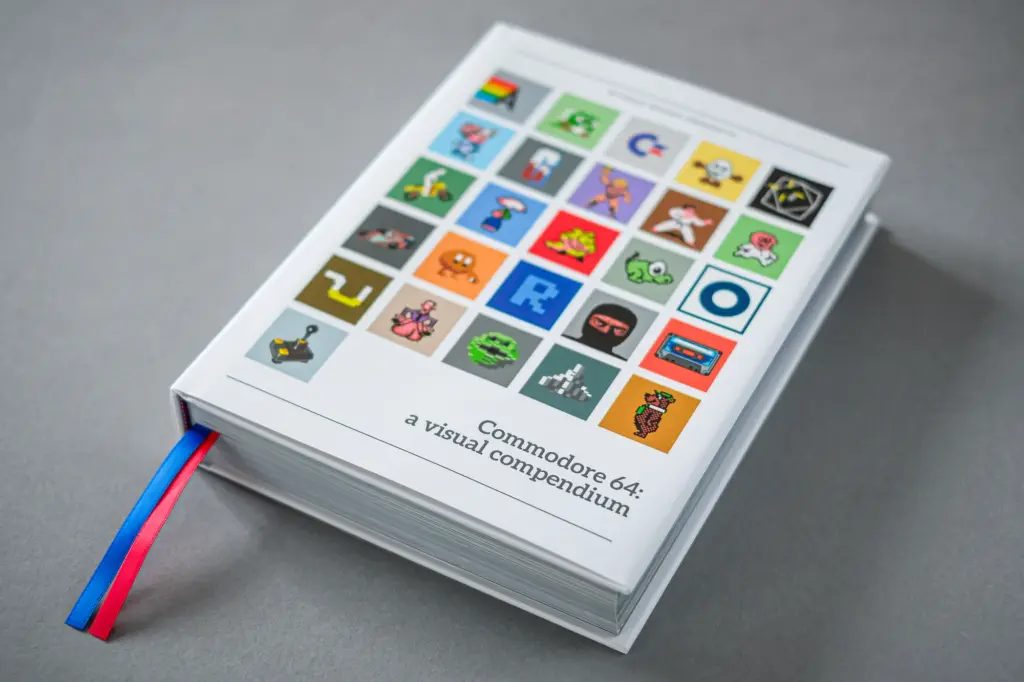
Dyer hopes the books will last. Not just physically, though they probably would survive a nuclear war and give the cockroaches something to read when they evolve and take over the world, but historically. He likes the idea that someone might find one decades from now and understand a little of why these games mattered.
A book cannot put you back in the 1980s or 1990s. It cannot recreate the sound of a tape loading, the glow of a CRT, or the weird magic of seeing an arcade screenshot in a magazine and thinking the future had arrived. But it can get closer than most things. It can preserve the artwork, the stories, the atmosphere, and the enthusiasm before it disappears into dead links and half-remembered forum posts.
In an industry obsessed with the next showcase, the next subscription drop, the next server shutdown, and the next piece of content being shoved into the machine, there is something quietly defiant about that. The companies are taking our games away from us. We won’t have discs to photograph for books in the future, and somehow we are letting them do it to us.
Bitmap Books makes objects that say old games are worth more than a thumbnail, a ROM file, or a quick nostalgia hit on social media. They were boxes, manuals, adverts, screenshots, playground stories and tape swapping, family rituals, bedroom shelves, and entire periods of life organised by the hardware under the telly.
Dyer may still think of himself as a graphic designer, but Bitmap Books has become something bigger than a design project. It is preservation disguised as premium publishing. It is nostalgia with standards. It is proof that if you treat games history as something valuable, other people will too.
And when the next box arrives, heavy and immaculate, you will probably still hesitate before opening the shrink wrap.
That, in its own ridiculous way, is the point.