





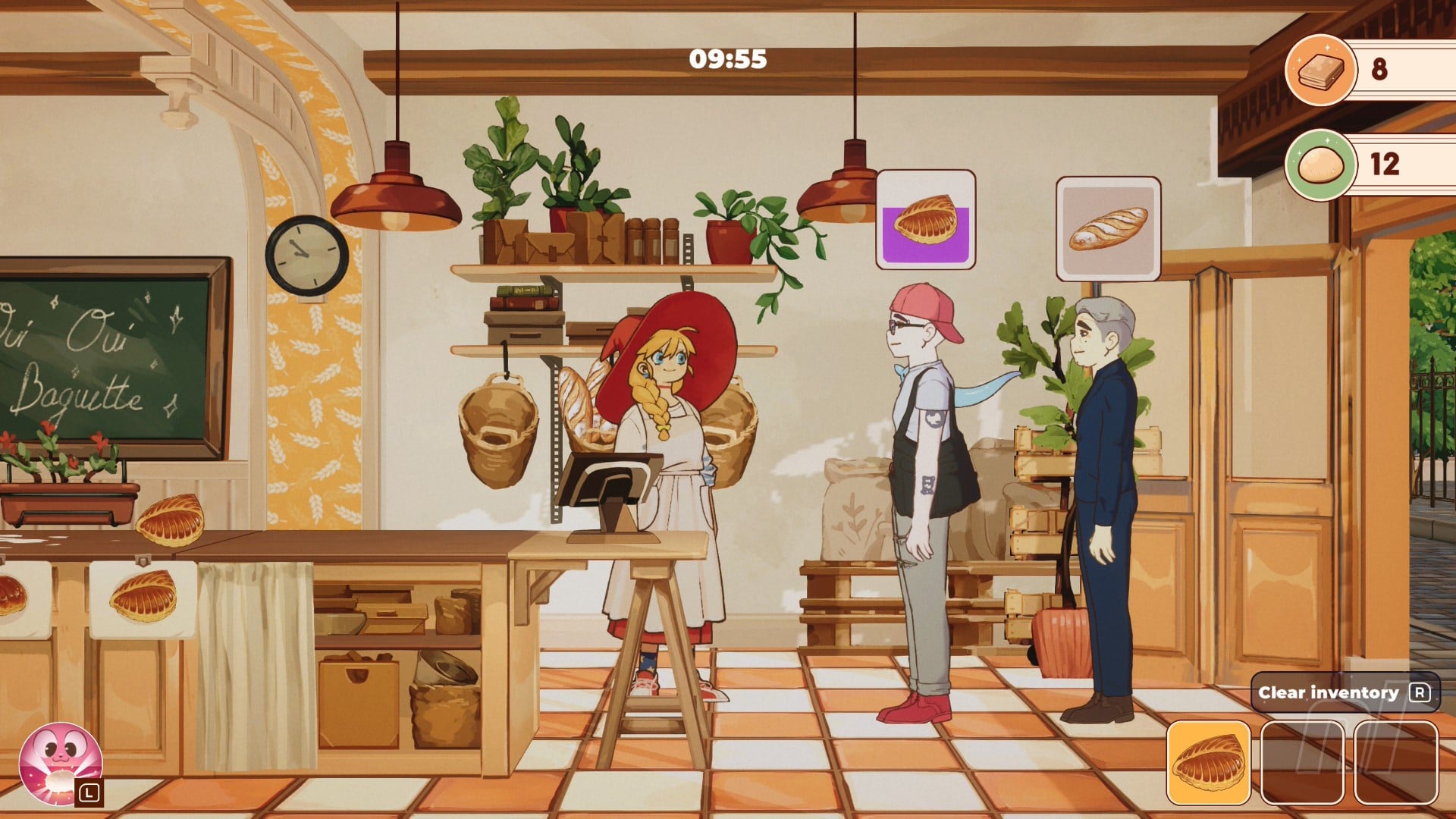
Is there a scent more heartwarming than freshly baked bread? French developer Sunny Lab and publisher Silver Lining Interactive don’t think so, if The Witch’s Bakery is anything to go by. This narrative-led adventure sim is filled with cute characters, emotional stories, and pastries. And although you can’t smell the baked goods themselves, you can immerse yourself in Parisian – and otherworldly – wonderlands.
You get flavours of Kiki’s Delivery Service throughout the game: anime art style, young witch protagonist, sassy familiar, bakery setting, not to mention emotional storyline. But instead of delivering for the bakery, this witch works in the bakery. And instead of flying, her main power is seeing into people’s hearts. Sunny Lab mixes these ingredients together to serve up a game that’s hearty and moreish, even if it doesn’t all go down smoothly.

You step into the hi-tops of Lunne, a plucky young witch who’s just swept in (!) to Paris. Accompanied by your cat-like familiar, Orio, you run the Le Croissant de Lunne patisserie. The game is divided into three portions: by day, you manage the bakery, by evening you explore Paris, and by night you work on your magic skills.
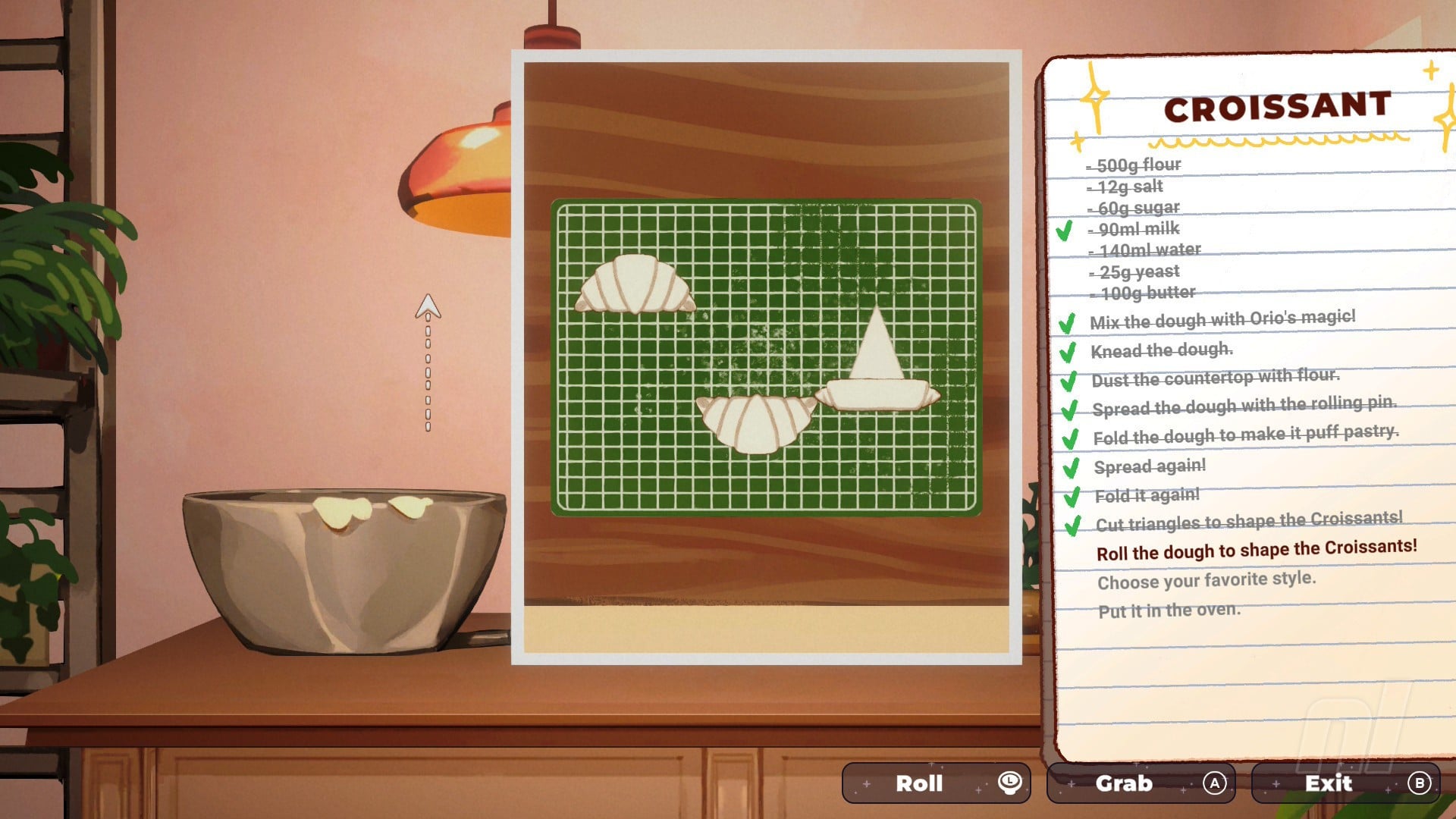
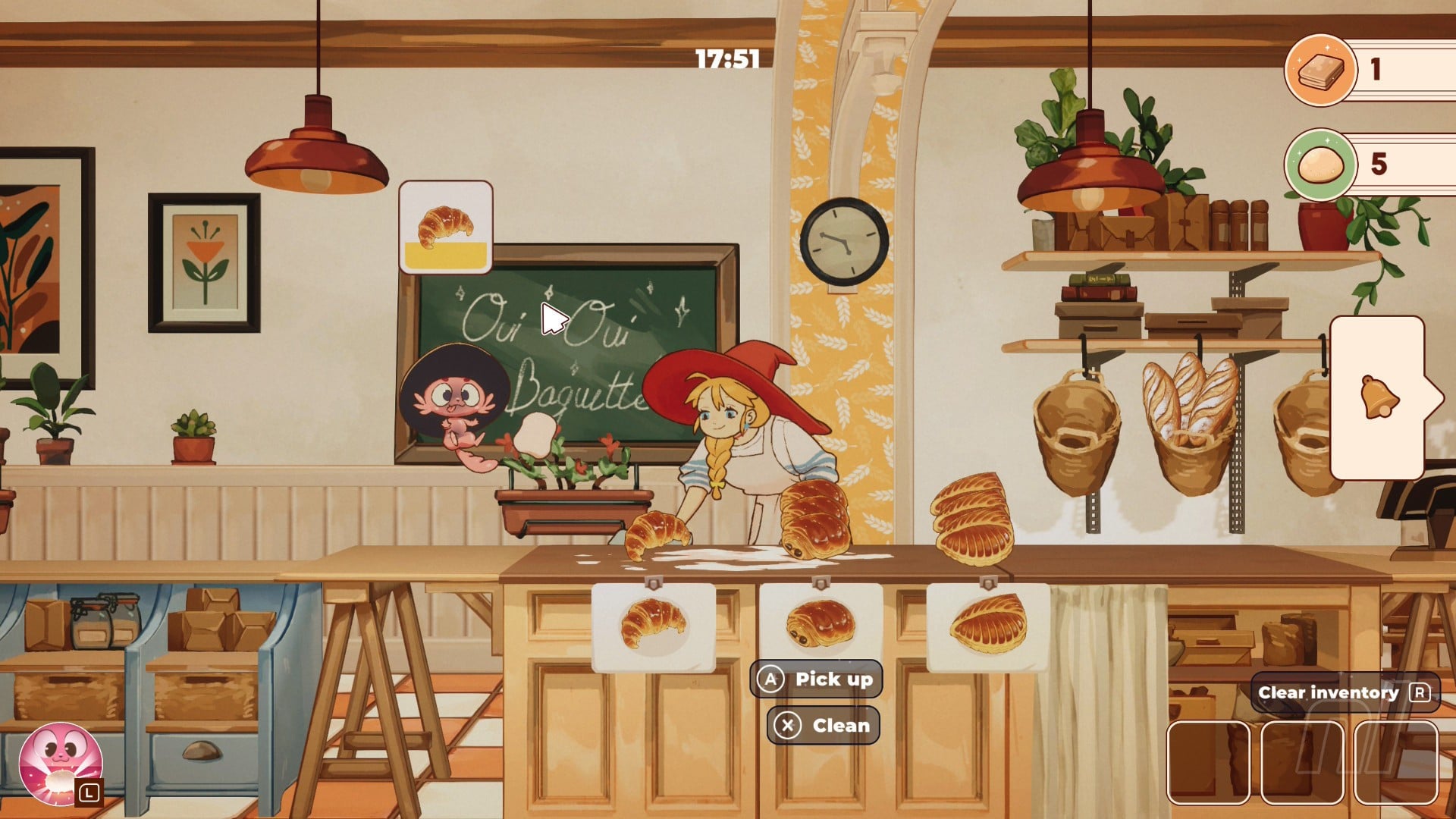
In the bakery, you fill bread and pastry orders. Orio bakes while you serve. Customers have a meter that measures their patience; if it runs out, they leave. Meanwhile, you manage your dough supply by playing quick minigames to knead it. As the game progresses you get customers who are less patient or more picky. You also get buffs that can help ease patience or accelerate cooking. This element is like Overcooked but the slower pace and lower stakes make it significantly less stressful.
However this is not merely a bakery sim. As a Mage of Heart, Lunne has an ability to see ‘Regrets’ – creatures that represent emotions burdening certain customers. When you serve these patrons, a minigame with a maze pops up – each has an obstacle relevant to anger, sadness or fear (for example, anger is fire blocks that burn you at intervals when you walk over them).
You help the emotion escape the maze – thereby helping the customer overcome their emotion. In the game’s universe, this happens because Lunne makes magical dough. But, even in real life, sometimes the simple pleasure of a delectable croissant reminds you that everything is going to be okay.
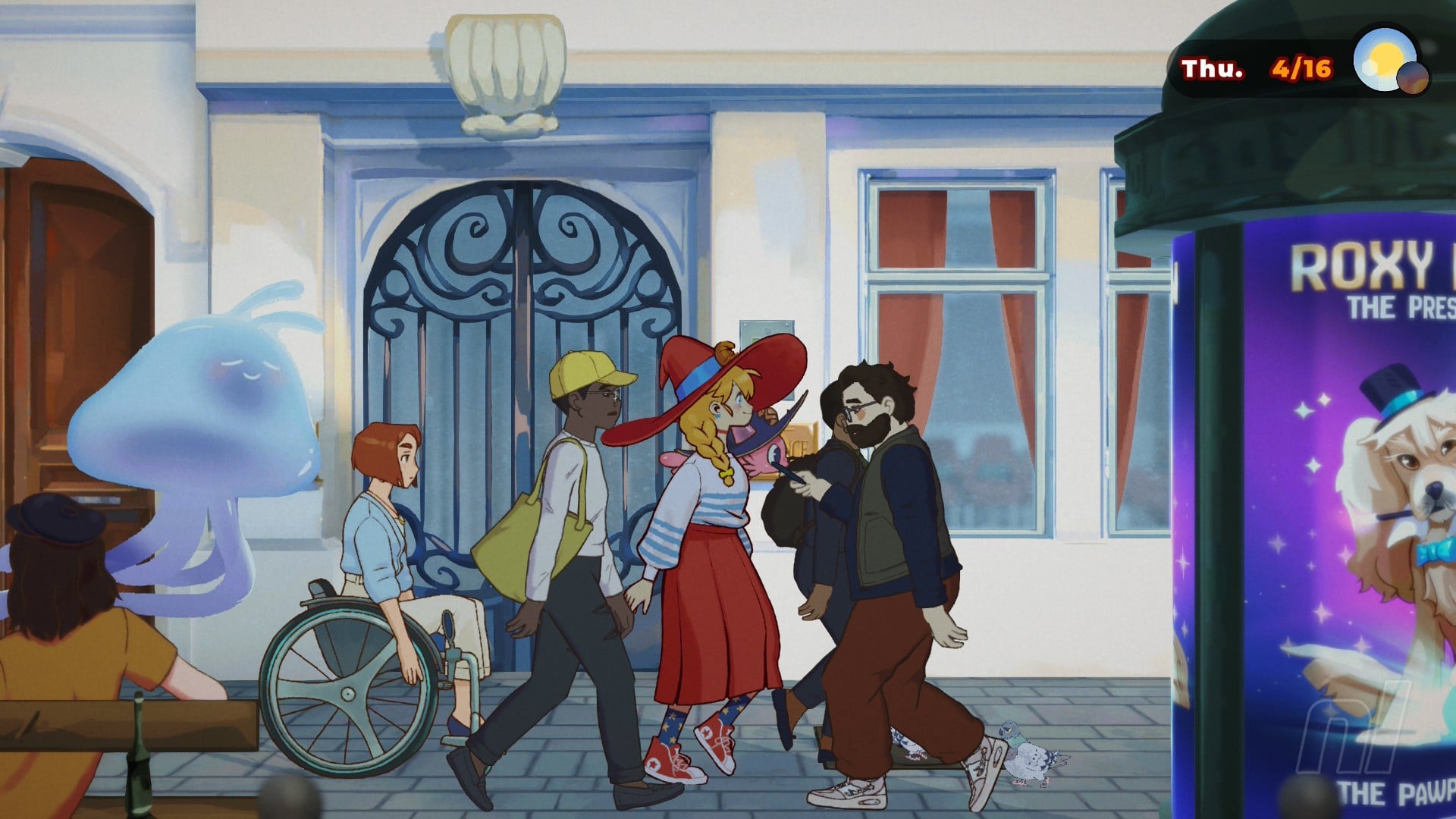
Once you clock off, you get to explore Paris. You might shop, watch a movie, or just sit in the park. These activities cost money and Lunne’s energy. They also help build Lunne’s friendships and fill out her skill tree, making her more attuned to the anger, sadness and fear in her customers.
The upskilling continues when you go home for the night. You can read or play narrative-led video games to increase skills. Or go to the Atelier where you play somewhat clunky minigames to practise baking. You lower cooking time and increase price as you level up – and you set yourself up with ready-made wares for the next day. Stay up too late, or do too many activities, though, and Orio will force you to go to sleep. It’s another way the game spotlights work-rest-play balance.
The molten centre of this game, however, is Lunne helping cure certain characters of their bigger Regrets. Our deepest secrets can’t simply be resolved with a baked good – and the game balances this well with deeper mental health issues.
The slower burn of peeling back a characters’ layers reminded me of Spiritfarer, especially the well-crafted dialogue. The dialogue is so crafted, in fact, that you can tell when a truth has gone unsaid. To find it, Lunne enters characters’ ‘Heart Palaces’ – deliciously designed otherworldly spaces.
For one character it’s an underwater land; for another, a surreal train hurtling through the air. Within the Heart Palace your aim is to guide a little creature (representing the emotion) to the Heart Cradle. Heart Palaces contain basic exploration, elevated puzzles and emotional insight, before they graduate into stealth games. You need to hide from ‘Torments’, monsters that poison the characters’ mind. There’s no combat or horror, yet softer cosy folk like me may find their hearts racing like they’ve consumed one too many pains au chocolat.
That said, you don’t ‘die’. If a Torment sees you, you’ll start the section again, but they’re short enough that no progress is lost. Besides, it’s worth the heart palpitations. The story might be fantasy but the emotions and struggles feel very real, to the point where even Lunne’s magic is not a quick fix. Au contraire, some of the truest magic is when she returns to the real world, and listens to the character to help them work through their problems. Complex family dynamics, burnout and the love-money struggle are all on the table, as are some darker themes (the game provides content warnings for these).
The Witch’s Bakery’s mental health focus and inclusive character cast earn progressive ticks from me. However it fell short on accessibility settings, and the settings menu itself is clunky. It’s always a shame when a game features characters with disability, yet fails to provide settings for those very players.
On Switch 2, some controls can be quite clunky too. The Atelier minigames particularly struggle: ingredients float in midair (not because of magic), items are selected randomly. There’s often a mouse cursor on screen but it can’t move with a joystick, only the detached Joy Con mouse. In fact, certain menus are unresponsive unless you release your Joy Cons to mouse mode. I usually gave up on the minigame or played in handheld mode, though a few times I had to restart. A little more time in the oven post-release will hopefully cook out some of these bugs.
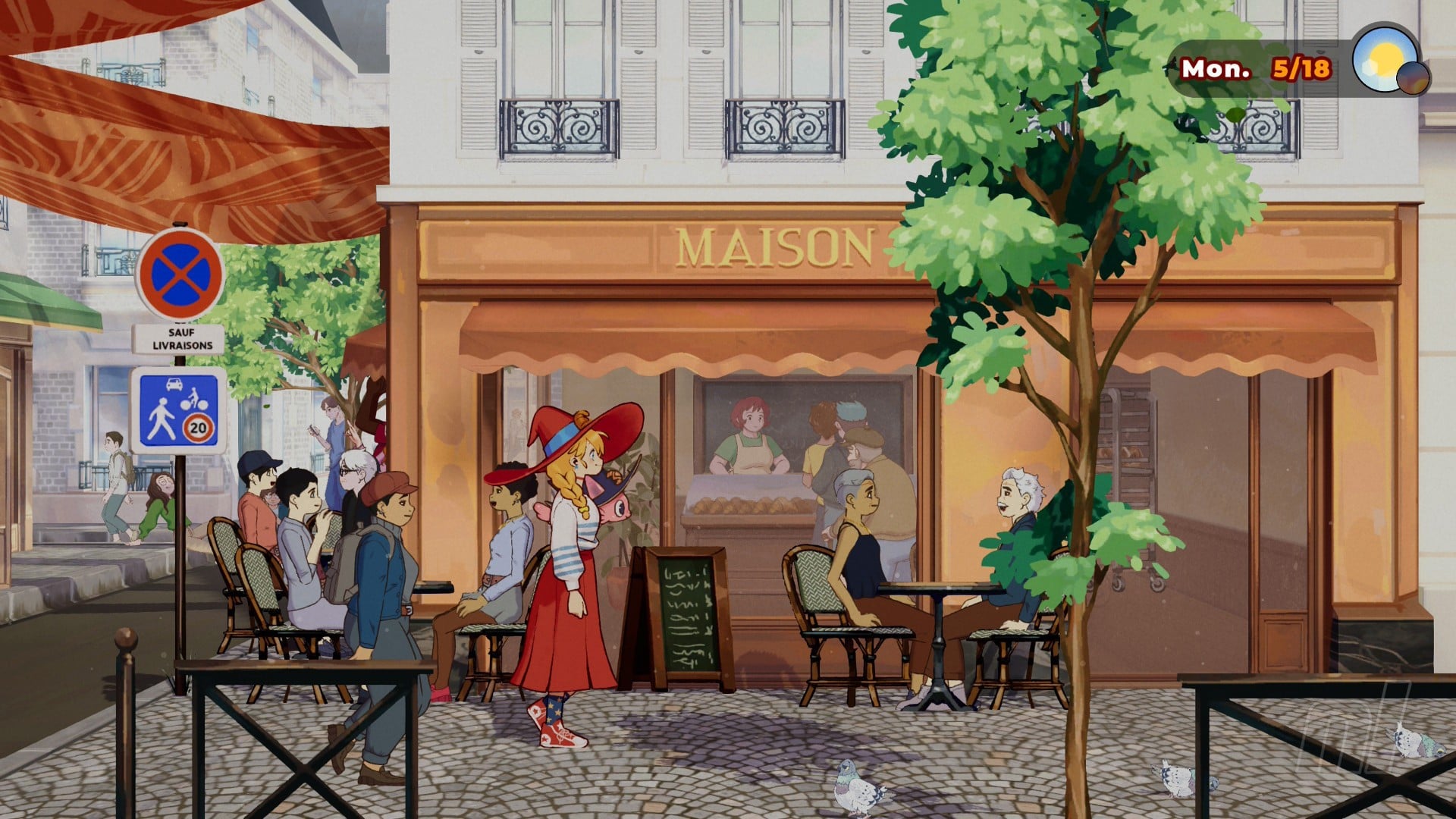
The 2D hand-drawn art style is enchanting. The backdrops are especially gorgeous – from vine-garnished cafés that line the cobbled Parisian streets, to the syrupy sheen on an apple turnover, to the turquoise depths of a Heart Palace. The character design is cute but, on closer inspection, ever-so-slightly inconsistent; Lunne is outlined with pencil in a soft anime-inspired design, while other characters don’t have those edges and look a little more ‘real’.
The soundtrack’s gentle tunes set the tone. You get a calming, gentle vibe during Lunne’s day-to-day activities that’s unmistakably Parisian, without crumbling into clichés. Then, it becomes darker and more suspenseful in Heart Palace scenes as the game reaches boiling point.
Conclusion
On the surface, The Witch’s Bakery is a simple cosy adventure sim about a young witch running a bakery. But bite into those flaky pastry layers and you’ll find a creamy centre: a narratively strong game with mental health themes. The emotional issues are handled gently, never oversimplified, and feel universal.
Between Lunne ‘curing’ customers’ Regrets and the bigger, darker storylines, this 15-hour game acknowledges that emotions are tough, and that there is no magic fix. Still, it’s a reminder that when everything seems terrible, sometimes all you need is a friend to listen – and a little sweet treat.