




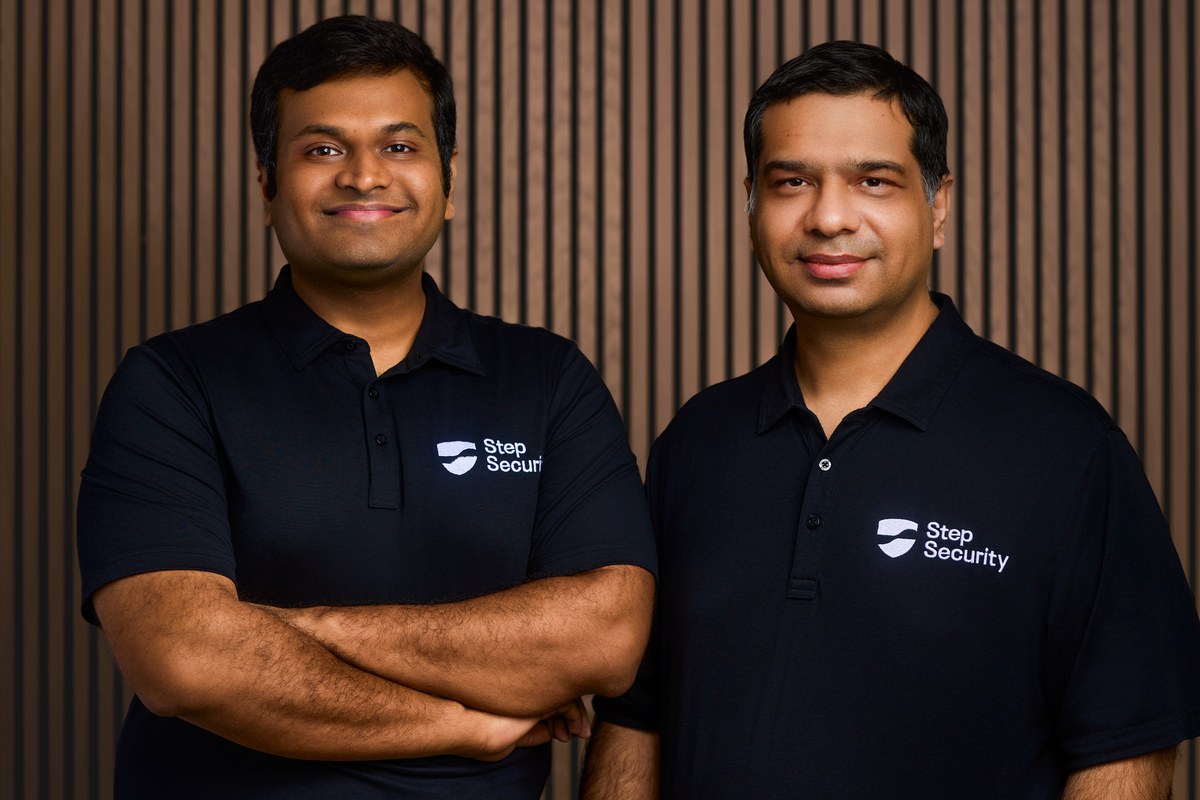
StepSecurity’s co-founders spent more than two decades combined at Microsoft. This week, as their startup announced a new round of funding, its researchers were also investigating a hacked Microsoft software package.
Their old employer is not the only one with this problem.
StepSecurity, a Seattle-area cybersecurity startup, raised a $20 million Series A round led by Elephant, with participation from existing investors Runtime Ventures, Inner Loop Capital and SaaS Ventures. The company has now raised $23 million, including a $3 million seed round in 2024. Axios Pro first reported the latest round.
The startup protects the systems used to build software: developers’ laptops, code repositories, package downloads and CI/CD pipelines, the automated systems that assemble and ship code.
The problem is that attackers increasingly slip malicious code into open-source software that developers download. That code can do damage as soon as it runs on a developer’s laptop or build system, stealing the passwords and keys that unlock other systems.
“A supply chain attack used to take a skilled team,” CEO Varun Sharma wrote in a blog post announcing the funding. “Now one person can vibe code it.”
Sharma spent about 15 years at Microsoft, where he led a team in Azure Security focused on making security easier for developers. CTO Ashish Kurmi spent nearly eight years at Microsoft before leading cloud security at Uber and infrastructure security at Plaid.
The two met at Microsoft and started StepSecurity in 2021, after working through the fallout from the SolarWinds and Codecov supply chain attacks at their respective employers.
A busy week: The Microsoft package, agent-framework, is the Python version of Microsoft’s open-source toolkit for building AI agents.
It gets roughly 190,000 downloads a month. Two malicious versions published on Nov. 17 to PyPI, the main public repository for Python software, included code designed to steal cloud and CI/CD credentials as soon as Python started up, SecurityWeek reported. PyPI quarantined both versions, and a Microsoft maintainer said an investigation was underway.
That’s one entry in a long list. StepSecurity’s announcement also cites the $6.3 billion Binance breach in October, which the FBI attributed to North Korea’s TraderTraitor group. Binance has said the attack started with a compromised employee laptop.
It also points to a tampered copy of Anthropic’s Claude Code extension that sat in Cursor’s extension marketplace for about 11 hours last month. Cursor said up to 5,000 users may have received the malicious version.
StepSecurity says it documented 56 confirmed compromises of trusted software components between August 2025 and August 2026, and roughly one every three days from March 2026 through the August report.
How it works: StepSecurity got its start with its own tool, Harden-Runner, which is free for open-source projects. It watches automated builds on GitHub and flags anything unexpected in the processes they run, the network connections they make or the files they change.
More than 20,000 open-source projects use it, the company says, up from about 3,000 at the time of the seed round. Unusual behavior spotted in those public builds has helped StepSecurity catch attacks early, the company says, including the March 2025 compromise of tj-actions, a widely used add-on for GitHub’s build automation.
StepSecurity’s paid products also protect developers’ laptops and check code repositories. Its Secure Registry service screens software packages before a company’s builds download them from public sources such as npm, the main public repository for JavaScript packages. It blocks versions known to be compromised and holds brand-new releases for a waiting period, giving researchers time to catch malicious ones before anyone installs them.
Along with the funding, StepSecurity is making Secure Registry free for public GitHub projects that use Harden-Runner and run their builds on GitHub’s servers. The free version defaults to a two-day waiting period and supports JavaScript packages, with Python, Java, Ruby and Rust planned.
StepSecurity has plenty of competition. Socket, a San Francisco startup that screens open-source packages for malicious code, raised $60 million at a $1 billion valuation in May. Sonatype, JFrog and Endor Labs also sell tools that can block risky packages before they’re installed.
Growth spurt: StepSecurity says its annual recurring revenue grew fivefold in 2024, fivefold again in 2025 and more than fivefold so far this year. It didn’t disclose dollar figures.
Named customers include Circle, Dexcom, Kong, Mercari, Chainguard and XBOW.
The company has 27 employees, up from four, including the founders, at the time of the seed round. Sharma is based in Sammamish and Kurmi in Kirkland, and the rest of the remote-first team is spread across the U.S., Canada and India.
What’s next: StepSecurity plans to extend its protections to agent sandboxes, the isolated environments where AI agents run code. Its argument is that anyone who asks an AI agent for a spreadsheet may be downloading and running open-source packages.
The company says it also plans to double its team over the next 12 months, mostly in security research, engineering and sales and marketing.