




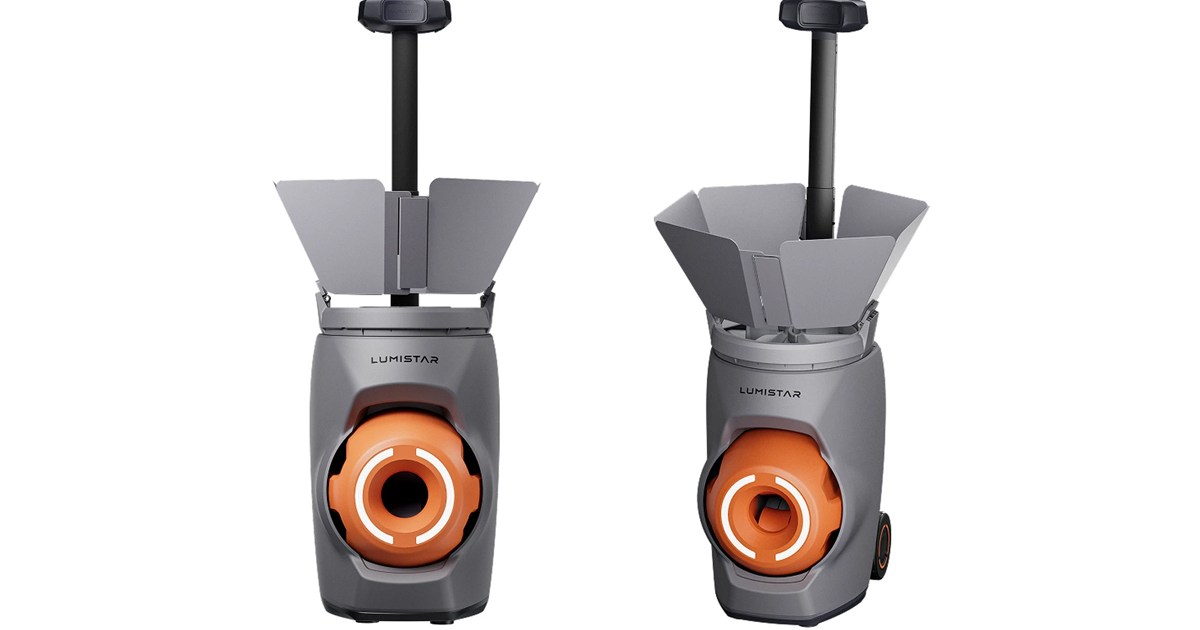
The Lumistar Tero aims to make solo tennis practice easier, combining adjustable drills with a voice-controlled wristband. After enjoying the PongBot Pace S Pro, I was keen to see another approach to practicing without a partner. I’ve been using the Melted Aura version for some much-needed forehand work. Here is my review.
Onto the court
As I’m still very much a keen enthusiast, I kept my sessions with the Lumistar Tero fairly simple, concentrating on forehands and backhands. Being able to repeat the same shot at a comfortable pace suits me far better than immediately cranking everything up. Leaving a longer gap between balls gave me a useful breather while I worked on getting the shot right.
For more experienced players, Lumistar advertises speeds of up to 87 mph, alongside a range of more demanding drills.
Getting the Tero from the car to the court is straightforward. The wheels and extending handle save my arms once it’s on the ground, while the folding ball container helps when packing it away.
I used the iPhone app for setup. Choosing a preset and adjusting the difficulty was straightforward, and the feeds were consistent enough to concentrate on my own mistakes.
Speak up
The wristband is the standout feature. Being able to pause the machine from the opposite baseline or change the pace without digging out my phone makes practice much more convenient.
Talking to the wristband felt a bit odd at first, but I soon preferred it to reaching for my phone. You do need to learn the accepted commands, and I occasionally had to repeat myself, but neither was enough to spoil the convenience. It removes a good amount of friction and I think it’s a feature that adds a lot to the experience.
Some limits

The standard Tero doesn’t have camera-based tracking of your returns, as that requires the optional Vision module. I’d treat the stats as a bonus. The practice is the main attraction.
Lumistar quotes up to four hours of battery life, which should cater to even marathon-long sessions.
Disclosure: Review sample provided by Lumistar.
Final Verdict
At $1,099, the Lumistar Tero is a substantial investment for tennis practice. However, the consistent feeds, manageable setup, and wristband controls make it very enjoyable to use. You’ll need to learn the voice commands, and the standard model’s analysis is limited, but it’s a useful way to practice when nobody else is available.
Positives and Negatives
-
Consistent feeds for repeat practice
-
Convenient wristband voice controls
-
Wheels and folding design aid transport
-
Useful presets and adjustable feed settings
-
Voice controls work well for the most part
-
Expensive for occasional use
-
Limited training analysis without the optional Vision module