




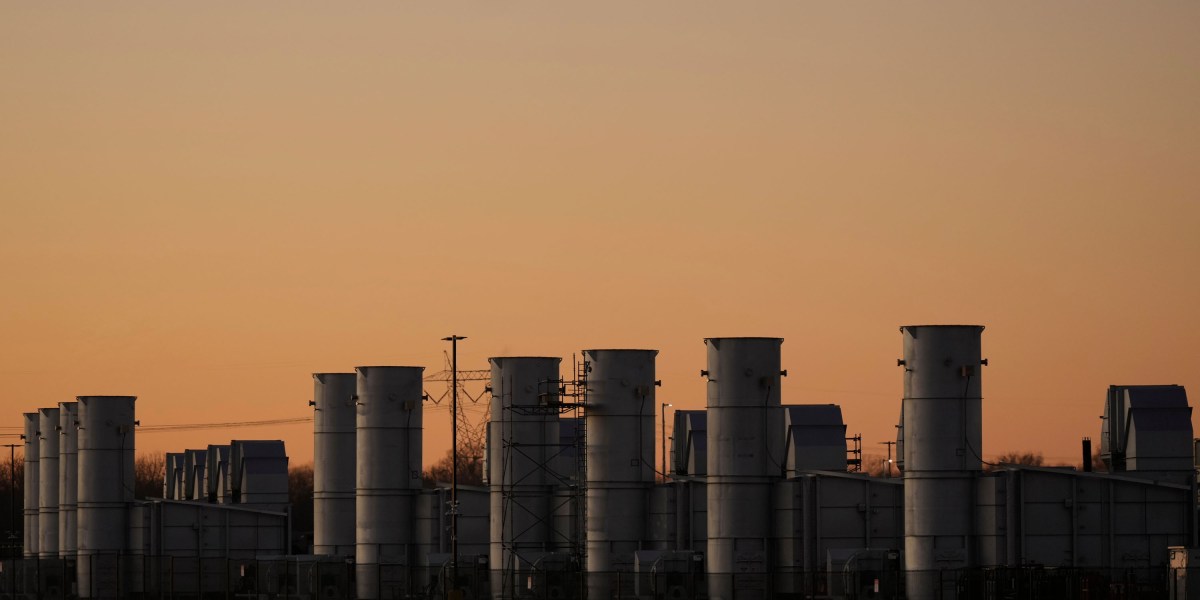
As of October 2026, data center developers have announced plans for more than 100 behind-the-meter gas power plants at facilities in the US, according to data from Cleanview, a market intelligence company. The facilities have a combined planned capacity of over 115 gigawatts, more than double the peak power demand of California. The vast majority of these announcements have come since the beginning of 2025.
It’s possible that not all these facilities will be built; only a small fraction are under construction or operating today. But there’s a growing trend of large data centers looking to build their own power supply, and this could shape the grid—and its climate impacts—for decades to come.
Building your own power plant is generally more expensive than just hooking up to the grid, but the AI rush has made developers willing to pay a significant premium to get online faster. “The biggest motivator for on-site power right now from data centers is speed,” says Musfika Mishi, an associate at BloombergNEF, an energy consultancy.
When developers want to build a new industrial facility—like a data center—that requires a lot of electricity, they need to request a grid connection from a local utility or regional grid operator. That request kicks off a yearslong process in which grid planners study the existing grid to understand what would need to be built to safely deliver power to the facility without compromising reliability. Upgrades might be required, like building new transmission lines or larger transformers, and the developer might be on the hook to help pay for them.
Rather than waiting for that process to play out, developers can opt to instead build their own power plants. These facilities are referred to as “behind the meter” because they sit on the customer’s side of a utility meter—supplying the building directly, rather than relying on a utility via a grid hookup.
“This shift in the data center developers’ power strategies towards off-grid gas raises some important questions about how data centers will be powered going forward,” says Brendan Pierpont, director of electricity at the think tank Energy Innovation.
Behind-the-meter doesn’t always mean being totally disconnected from the grid, however. Some facilities may build such plants as a temporary measure, eventually connecting to the grid and tapping their own power plants only as backup. “It’s really just a very expensive way to bridge that maybe five-to-seven-year timeline gap until these data centers can get a grid connection,” Pierpont says.
Even if gas plants are pitched as a near-term solution, building new fossil fuel infrastructure could lead to longer-term effects, since an operator might choose to continue running plants once they’ve spent money building them. “Even though data centers say that it’s a grid-bridging solution, the probability that it is going to be in use much longer is a real risk, and that leads to fossil fuel lock-in,” Mishi says.