




It’s quite the time to be somebody who loves both video games and Lego. In a sense, it perhaps shouldn’t be surprising that the worlds of digital gaming and Danish brick-building toys are colliding so thoroughly – the venn diagram of the audiences of each is frequently simply a circle. In fact, it’s sort of surprising that it took this long. Lego welcomed its first licensed brand sets in 1999 with the arrival of Star Wars – and by that logic, it took about a quarter century for video game-inspired builds to really take hold in the Lego space.
It’s been a slow burn. The first time video games crossed into the Lego brick realm is a little fluffy, depending on your definition. A figure of a character from the PC gem Lego Island was made so early that it predates the Star Wars licensing – and then within Star Wars there was a 2007 set based on video game The Force Unleashed. The first proper brush didn’t come until 2012, though, when a Minecraft set bought to market via the fan-designed Lego Ideas theme used the blocky similarities between the two brands as a potent proof of concept and market viability for video gaming Lego.
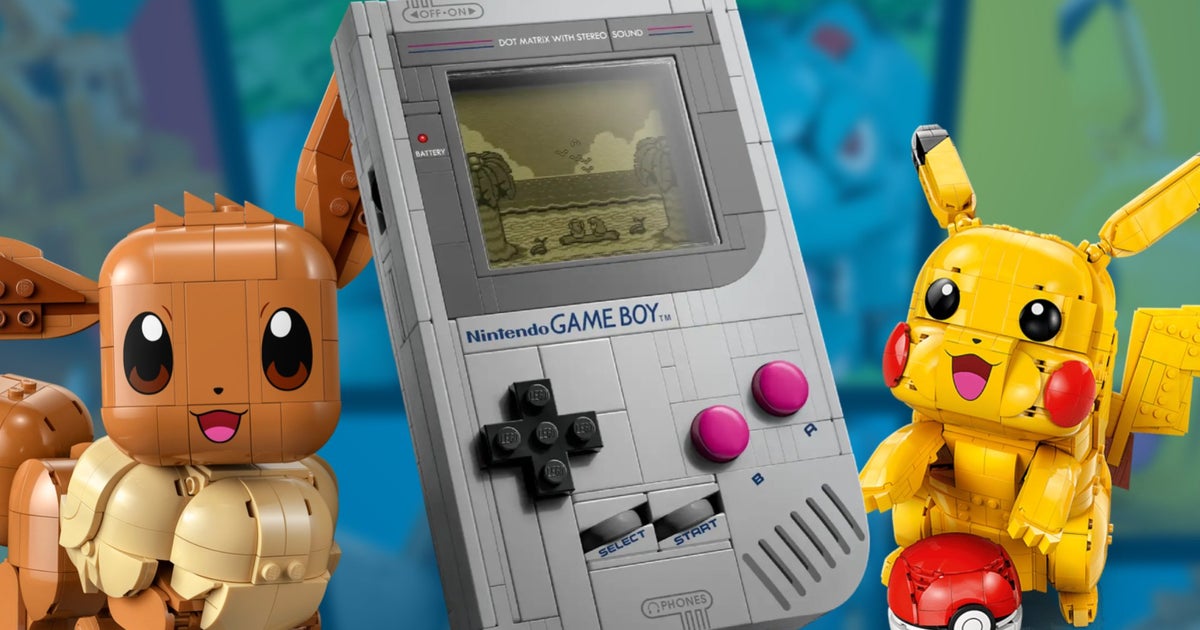
Lego has scarcely looked back since, and over the last few years there has been an explosion: more Minecraft, Mario, Sonic, Overwatch, Horizon, Fortnite, Animal Crossing, Pac-Man, Zelda, hardware both official and generic – the list goes on. The latest is of course Pokemon, which in February launches several adult-targeted, mega-scale, mega-priced sets aimed at thirty-something nostalgia like a Hyper Beam.
Anyway, all of this is to say that it seems that Lego’s commitment to gaming is now absolute. It’s arguably a match made in heaven – the previously one-way relationship of hugely successful Lego video games now matched by equally successful video game Lego. Though there are arguably challenges for Lego to solve as it navigates the gaming space.
Primarily raised this week is the question of pricing, a conversation spurred on by the existence of a Pokemon set that will retail for a whopping £580 – putting it comfortably among the top ten most expensive and largest Lego builds ever. It is, to be fair, eye-wateringly expensive – but I’m hopeful for how the rest of Lego Pokemon will shake out. We know from retailer listing leaks and the like that there is more to come in the Pokemon theme – and I expect what remains to be revealed will probably be a great deal more sensible and inevitably more kid-friendly.
If you look at Star Wars – a media property with similar cross-generational appeal to Pokemon – sets always run the gamut. Historically you’ve been able to get a simpler X-Wing playset for as little as £25, but some have run up to hundreds of pounds. The same is true for things like the Millenium Falcon, of course, and it’ll doubtless over time also be true of Pokemon. The eye-poppingly expensive sets are for the most hardcore collectors – and for a franchise like Pokemon, with graded rare trading cards routinely changing hands for five figures or more, everyone knows that audience exists.

Some of Lego’s best work in gaming exists in the lower price brackets, though. Two recent sets really embody this, I think. The £55 Game Boy replica, complete with a couple of carts, is alarmingly accurate-looking, a delightfully entertaining build, and needles nostalgia in all the right ways. There are even upcoming unofficial kits to let you turn the brick-built Game Boy into a functional console, if you’re a real sicko about it.
In a similar vein there’s the generically-branded but lovingly-crafted Arcade Machine. This is an interesting one for showing off the cost of licensing, too: this cute little machine doesn’t evoke any specific arcade classic but rather the more general look and feel of eighties cabinets. With no licensing baggage attached, it contains more pieces than the Game Boy but retails for £20 less.

I also think Lego Sonic has been delightful in its roll-out – simple play-sets, at kid-friendly price brackets (as cheap as £9, topping out at £60) with nary a techy gimmick in sight. That isn’t to entirely disparage Lego Mario – I do see the value in its tech-driven play, especially to modern kids who might struggle to retain interest in toys that don’t give something interactive back – but there is a delightful purity to the Sonic sets, and I’m enjoying how they don’t seem too tied to any particular Sonic era or continuity – each set is simply a broad celebration of the series and its characters, as they should be.
Anyway. All of this is to say, chatter about account-emptying pricing or the necessity of gimmicks aside, it’s clear that video games have now become as firm a part of Lego’s portfolio as… well, Star Wars, or Potter, or any of those other mainstays. Like gaming’s resurgence in Hollywood, I suppose it’s a sign of the times: of us eighties and nineties kids getting older and having disposable income or kids of our own, and of gaming becoming a properly embedded part of ‘the culture’ as opposed to a fringe aberration that gets side-eyed by ‘proper’ entertainment. You love to see it.
As someone who truly loves Lego and video games, I’m excited. Even if that big Pokemon set is far too rich for my blood, what I see is that we’re just a few short weeks into 2026 and we’ve already had the Pokemon announcement, a new Lego Zelda leak, and the year surely holds more promise of even more such reveals. As that happens, I expect we’ll be doing a lot more about Lego here on Eurogamer. I honestly couldn’t be more thrilled.